Flagship Aluminium Door Configurations & Systems
Direct export configurations rigorously fabricated for high wind loads, thermal efficiency, strict acoustic mitigation, and elevated architectural presence.
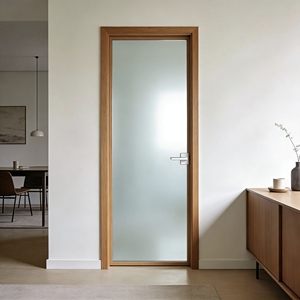
High Privacy Double Tempered Bathroom Casement Door
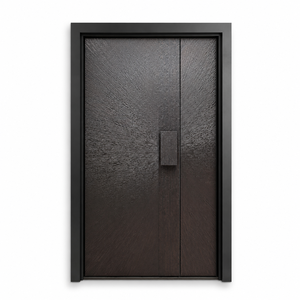
Cast Aluminum Precision Villa Security Front Entry Door
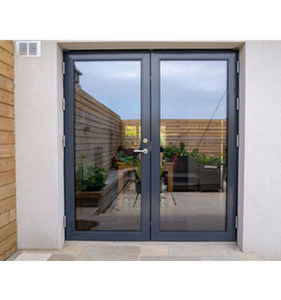
Architectural French Aluminum Glass Double Entry Door
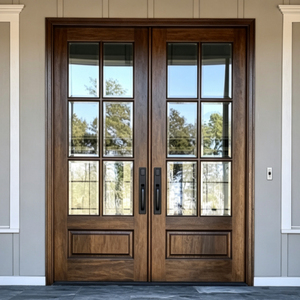
Triple-Glazed Aluminum-Clad Timber Casement Door
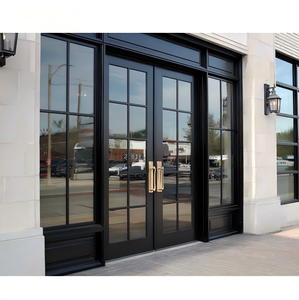
Heavy Commercial Automatic Swing Storefront Glass Door
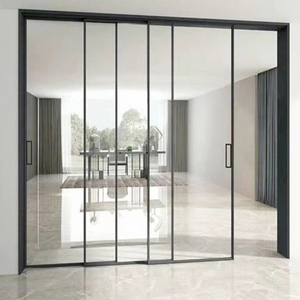
Heavy-Duty Acoustic Partition Double Glazed Sliding Door
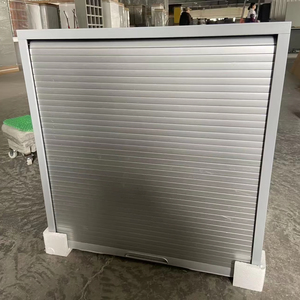
Precision Architectural Tambour Slat Enclosure Kit
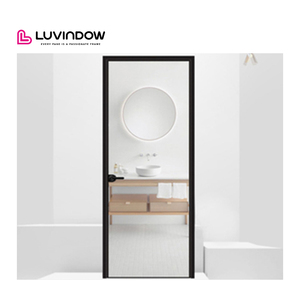
Minimalist Ultra-Narrow Stile Double Glazed Aluminium Door
Enterprise Capability & Quality Engineering Benchmarks
Recognised as one of China's top 10 premium door and window manufacturers, DERCHI (Guangdong Dejiyoupin Doors and Windows Co., Ltd.) integrates vertical metallurgy, CNC machining, and global compliance testing.
One-Stop Complete Envelope Solutions
Consolidate your entire door schedule from a single production campus: thermal-break fancy pivot doors, cast aluminium entries, minimal interior systems, and automated garage entrances.
International Testing & Certifications
Full conformance with CE (EN 14351-1), Australian AS 2047 N6 cyclonic testing, ISO 9001 quality systems, and UL fire-rated core performance for streamlined building authority approvals.
Complete Architectural Bespoke Tailoring
Over-height pivots up to 6 meters, bespoke 3D cast relief panels, Qualicoat class-2 powder coating, and specialized CAD/BIM structural shop drawings delivered directly to architect schedules.
Global Engineering & Timezone Alignment
Dedicated technical sales engineering teams operating across CET, GMT, and EST business schedules. Detailed remote installation guidance and end-to-end logistics tracking.
The Evolution of Architectural Aluminium: Metallurgical Integrity & Extrusion Control
In contemporary architectural engineering, the categorization of "fancy aluminium doors" has transcended purely superficial aesthetic treatments. Today's global developments demand high-strength structural profiles capable of withstanding extreme dynamic wind fatigue, zero thermal transfer bridging, and sustained mechanical cycles without sag or stile deflection. China's premier manufacturing ecosystem, spearheaded by our primary facility in Foshan, sets the benchmark for international export by implementing high-tensile 6063-T6 and 6061-T6 virgin primary billet extrusions instead of remelted scrap scrap-cast scrap.
Virgin primary alloy profiles guarantee that the wall thicknesses (routinely configured from 2.0mm to 3.5mm on structural stiles) maintain uniform metallurgical density. This density is essential to eliminate warping under intense solar radiation, often referred to as the bi-metal deflection effect when exterior panel faces experience 65°C heat while interior spaces are climate-controlled to 20°C. DERCHI integrates reinforced polyamide (PA66 GF25) thermal break barriers that mechanically decouple interior and exterior aluminium faces, mitigating condensation formation while maintaining structural envelope rigidity across large-scale openings.
Surface treatment represents another vital dimension of engineering compliance. Marine-grade powder coatings adhering to Qualicoat Class 2 specifications, alongside fluorocarbon (PVDF) three-coat finishes, ensure that door assemblies installed in harsh saline coastal territories or hyper-arid desert regions resist chalking, pitting, and UV-driven polymer breakdown for multi-decade life cycles. By executing in-house chemical pre-treatment and electrostatic spraying, our factory prevents interfacial corrosion beneath the finish coat, establishing lasting mechanical and visual reliability.
Future Sourcing & Architectural Engineering Trends
Key technological, regulatory, and design trajectories transforming the specification of aluminium door assemblies across global architectural markets.
Smart Access & Facade Integration
Architects are shifting away from standalone mechanical deadbolts. Current procurement schedules require factory-concealed wire chases, multi-protocol biometric scanners, and electrified multi-point automatic motor drives linked to unified building automation systems (BACnet / Modbus).
Monumental Pivot Geometries
Demand for oversized pivot entries measuring up to 2.4 meters wide by 6.0 meters high is accelerating. These installations require heavy-duty bottom pivot hydraulic boxes capable of supporting 800+ kg door panels with precision damping and sustained wind-resistance sealing.
Strict Thermal & Embodied Carbon Codes
European and North American standards (such as Germany's GEG and the UK's Part L) now require overall thermal transmittance values below UD 1.0 W/m²·K. Future procurement requires documented cradle-to-gate Environmental Product Declarations (EPDs) and verifiable recycled aluminium content.
System Specification Matrix for Commercial & Villa Applications
Review standard physical testing values, thermal parameters, and hardware capabilities available across our primary manufacturing lines.
| System Parameter | Standard Classification | Performance Benchmark | Structural Engineering Details |
|---|---|---|---|
| Alloy Metallurgy & Temper | EN AW-6063 / 6061 | T5 / T6 Chemical Hardening | Virgin billet extrusion, web thickness 2.0mm – 3.5mm for structural integrity. |
| Thermal Transmittance (UD) | EN ISO 10077-1/-2 | Down to 0.85 W/m²·K | PA66 GF25 thermal breaks; polyurethane core; argon-filled warm-edge triple glazing. |
| Burglar & Force Resistance | EN 1627 / RC2 – RC3 | Classified Security Pass | Multi-point hook deadbolts, anti-drill strike plates, and laminated security glass. |
| Wind Load Resistance | AS 2047 / EN 12210 | Class C5 / N6 Serviceability | Deflection ≤ 1/300 under extreme cyclical air pressures in exposed conditions. |
| Air Infiltration & Sealing | EN 12207 / Class 4 | ≤ 0.1 m³/(h·m²) | Triple continuous EPDM / silicone vulcanized acoustic gaskets along perimeter frame. |
| Acoustic Damping (Rw) | EN ISO 717-1 / ASTM E90 | 38 dB – 44 dB Attenuation | Dual-cavity acoustic PVB laminated glass with dense rockwool or aerogel internal core panels. |
Strategic Sourcing Strategy: Managing Quality Verification, Logistics, and Tolerances
Procuring custom architectural doors from Chinese manufacturing partners requires a structured technical validation process. Discrepancies on international jobsites often arise not from metal defect issues, but from misaligned field dimensions, varying threshold drainage expectations, and inconsistent rough-opening clearances. As an experienced exporter to the European, Australian, and North American markets, our factory addresses these issues early by generating detailed CAD shop drawings that define finished floor heights, sub-sill flashing profiles, anchor pocket spacings, and glass edge clearances before raw profiles are cut.
Factory Acceptance Testing (FAT) forms the baseline of our production protocol. Before international packaging, every fancy entry door undergoes a dry assembly test: the leaf is hung within its structural subframe, pivot alignments are checked using laser levels, multi-point lock compression is measured with force gauges, and perimeter gasket contact is confirmed around the entire frame. Finish surfaces are verified with dry film thickness (DFT) gauges and gloss meters to guarantee uniformity across every component.
For intercontinental maritime transit, our packaging uses reinforced multi-layer protection. Individual door panels are wrapped in non-scratch protective film, corners are secured with heavy cellular buffers, and the entire assembly is crated in fully enclosed, fumigated marine plywood cases reinforced with internal steel bracing. This protects critical hardware, hinges, and calibrated balance pivots throughout ocean transport and final flatbed distribution to the jobsite.
Frequently Asked Questions for Project Specifiers & Importers
Direct answers addressing technical specifications, lead times, regulatory compliance, and project execution protocols.
Do DERCHI fancy aluminium doors comply with European CE and national standards?
Yes. Our door assemblies comply with the harmonized European standard EN 14351-1 and hold CE marking. Full Declaration of Performance (DoP) documents, covering air permeability, water tightness, wind load resistance, and thermal transmittance calculations, are provided with each project submittal.
How does the factory prevent sagging in monumental, wide pivot assemblies?
For wide leaves over 1.5 meters, we incorporate internal diagonal tensioning tie-rods within the internal aluminium structure. These allow fine adjustments to counter long-term gravitational sagging. We also utilize precision floor springs and needle-bearing overhead pivots engineered for commercial applications up to 1,000 kg.
What custom finishes, textures, and panel configurations are available?
We supply any standard RAL powder coat color in smooth, matte, and sand-tex finishes, alongside marine-grade fluorocarbon (PVDF) and architectural anodizing up to 25 microns. Additional options include 3D cast aluminium architectural reliefs, real timber veneer claddings, integrated LED light channels, and sintered stone surface panels.
What are the standard production lead times and global shipping methods?
Following final approval of CAD shop drawings and hardware configurations, standard factory production takes 25 to 35 calendar days. Shipments are consolidated and dispatched via direct sea freight from Foshan, Guangzhou, or Shenzhen to key global container ports including Rotterdam, Hamburg, Felixstowe, Sydney, and Long Beach.
Ready to Engineer Your Project's Signature Entry Facade?
Connect directly with our engineering sales specialists in Foshan. Share your door schedules, target performance values, or preliminary CAD drawings for immediate commercial review, structural analysis, and factory-direct pricing.
Inquire Now