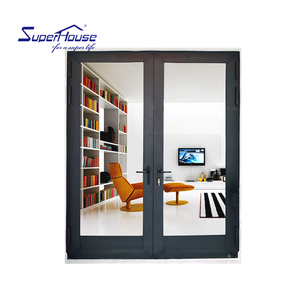
Architectural Systems Catalog
Curated High-Performance Fenestration & Opening Solutions
Engineered to integrate seamlessly with custom radial and segmented arch designs. DERCHI delivers multi-cavity thermal insulation, hurricane-grade acoustic attenuation, and architectural flexibility certified across North American, European, and Australasian building codes.
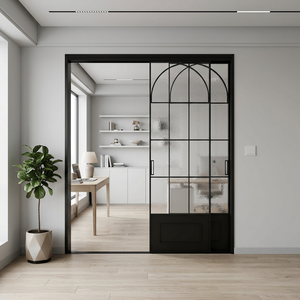
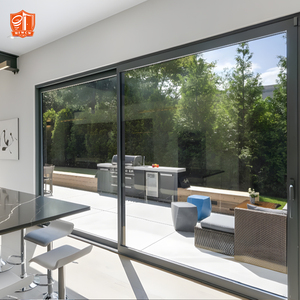
180,000m²
Foshan Manufacturing Base
25+
Years Engineering Experience
600+
Skilled Technicians & Staff
100+
Patents & CE/AS2047 Credentials
Technical Whitepaper & Architectural Standard
Engineering Precision in Modern Aluminum Arch Fenestration
Understanding the mechanical deformation limits, thermal break integrity, and structural aerodynamics of curved aluminum fenestration for institutional, residential, and commercial B2B procurement.
Architectural arched windows represent a masterclass of structural civil engineering, merging centuries of Romanesque, Gothic, and Mediterranean aesthetics with 21st-century thermal physics. Unlike rectilinear fenestration, where straight profile extrusions are mitered and crimped with standard 90-degree corner keys, custom aluminum arch windows demand sophisticated stretch-bending and CNC three-roll bending processes. Each radius segment must undergo calculated plastic deformation while preserving the internal chamber geometry of the polyamide thermal barrier (PA66 GF25) without buckling, delamination, or wall thinning.
As a premier China wholesale aluminum arch window manufacturer based in Shishan Town, Foshan, DERCHI utilizes automated CNC hydraulic stretch-bending equipment coupled with calibrated internal mandrels. Standard 6063-T5 or high-tensile 6060-T6 aluminum alloys are manipulated under computer-monitored tensile elongation. This continuous feedback loop guarantees that the cross-sectional moment of inertia ($I_x$ and $I_y$) remains true across Gothic points, half-round arches, segment-top radii, and eyebrow curves.
In addition to structural profile integrity, curved glazing integration requires specialized industrial engineering. Double- and triple-glazed insulated glass units (IGUs) installed in arched frames must maintain airtight sealing around complex radial perimeters. Thermal cycling and differential solar absorption can induce localized stress along non-linear edges. DERCHI mitigates perimeter edge shear through custom-bent warm-edge spacers (polyisobutylene primary seal backed by two-part structural silicone) and automated robotic argon gas filling.
The resulting assembly satisfies demanding air permeability, water tightness, and wind load standards globally. From residential luxury estates demanding narrow sightlines and sound attenuation to coastal multi-story commercial buildings subject to hurricane impact pressures (ASTM E1886/E1996 and AS 2047 cyclonic testing), our arched systems ensure structural and thermal longevity without aesthetic compromise.
Critical Insight for Architectural Specifiers: Specifying curved aluminum windows requires strict attention to the Minimum Bending Radius ($R_{min}$). Profile wall thickness, the depth of the thermal break strip, and the temper state directly define the transition threshold between clean elastic bending and wall collapse. DERCHI’s in-house R&D calculates localized spring-back tolerances in FEA simulations before production tooling begins, delivering a radius variance of less than ±1.0mm per segment.
| Performance Parameter | Test Standard / Regulatory Benchmark | DERCHI Achieved Value | Engineering Solution Applied |
|---|---|---|---|
| Thermal Transmittance ($U_w$) | EN ISO 10077-1 / NFRC 100/200 | 0.92 – 1.40 W/(m²·K) | Multi-cavity PA66 GF25 thermal breaks with aero-gel insulation filling |
| Structural Wind Resistance | AS 2047 (N6 Rating) / ASTM E330 | > 4,500 Pa Design Pressure | Reinforced 2.0mm–3.0mm primary wall thickness & internal steel stiffeners |
| Water Tightness | EN 12208 (Class 9A) / AAMA 501.1 | No Leakage @ 900 Pa | Triple continuous EPDM vulcanized gaskets with stepped drainage chambers |
| Acoustic Attenuation ($R_w$) | EN ISO 717-1 / ASTM E90 | 36 dB – 44 dB Sound Reduction | Asymmetric laminate glass configurations (6mm + 1.52PVB + 6mm Low-E) |
| Burglar & Impact Resistance | EN 1627 (RC2 / RC3) & Florida TAS 201/202 | Passed Large Missile Impact | Multi-point peripheral perimeter locking with hardened mushroom cams |
Industry Intelligence
Future Procurement Trends in Architectural Curved Fenestration
Strategic procurement planning requires forecasting regulatory shifts, energy mandates, and architectural paradigms. Here is how leading general contractors and international distributors are pivoting their procurement roadmaps.
1. Decarbonized & Circular Supply Chains
Regulatory frameworks such as the EU’s CBAM (Carbon Border Adjustment Mechanism) and LEED v4.1 certification are transforming aluminum sourcing. Procurement officers now demand low-carbon billet extrusion utilizing renewable hydroelectric smelting. In response, DERCHI maintains a chain-of-custody tracking protocol for recyclable billet feeds, reducing embedded carbon per metric ton of manufactured window units by up to 40%.
2. Digital Twin & BIM-Integrated CAD Sourcing
Off-site prefabrication and modern construction methods require zero tolerance for on-site dimensional corrections. Project developers increasingly reject flat PDF specifications in favor of IFC and Revit BIM object libraries. DERCHI’s engineering division generates full parametric 3D CAD files prior to fabrication, integrating laser scan site measurements directly into CNC roll-bending and automated profile machining paths.
3. Ultra-Slim Sightlines with Triple Glazing
Historically, thermal performance meant heavy, bulky window framing that detracted from historic arch proportions. The emerging market preference balances minimal profile reveals with heavy triple-pane argon or krypton glazing cavities. By utilizing micro-cellular polyamide insulation and alloy hardening treatments, DERCHI creates slim architectural profiles capable of supporting up to 50mm glazed units.

Factory Direct Strength
Guangdong Dejiyoupin: Engineering Excellence
Guangdong Dejiyoupin Doors and Windows Co., Ltd. (DERCHI) operates one of Southern China's most technologically advanced architectural fenestration and door manufacturing facilities. Headquartered in Foshan—the epicenter of high-end aluminum extrusion—our comprehensive production campus integrates profile bending, CNC milling, automated powder coating, insulated glass fabrication, and rigorous QA stress testing under one ISO 9001:2015 certified roof.
- 180,000 m² Production Base: Over 600 full-time specialists executing large-scale project schedules simultaneously.
- Schüco Partner Heritage: Trusted by top UK tier-one builders and European contractors for luxury residential villa enclaves.
- Complete Global Compliance: Certified for CE EN 14351-1, Australian AS 2047 (N6 Cyclonic), and North American NFRC/AAMA codes.
- Dedicated Engineering Support: English-fluent technical specialists aligned with European, American, and Gulf project business hours.
Standard Operating Procedure
End-to-End Quality Management & Fulfillment
How DERCHI guarantees that every wholesale aluminum arch window meets exact architectural specifications from digital CAD schematics to overseas on-site delivery.

Phase 01
Bespoke Engineering
Full shop drawings, radial load simulations, and wind deflection calculations generated for architect approval.

Phase 02
Testing & Calibration
In-house chamber testing for pressure decay, cyclic water spray penetration, and radial corner structural rigidity.

Phase 03
Export Crating
Reinforced fumigated solid timber crates, desiccants, corner edge protectors, and specialized vertical stillages.

Phase 04
Technical Handover
Direct coordination with local site contractors, supplying detailed radial fixing manuals and video technical guice.
Buyer Knowledge Base
Frequently Asked Questions for Wholesale B2B Buyers
Key commercial, structural, and logistical questions addressed for overseas architects, façade contractors, and wholesale window distributors.
What is the typical manufacturing lead time for custom aluminum arch windows?
Standard tooling and fabrication for custom radius arch windows takes 25 to 35 business days following final CAD shop drawing sign-off. For high-volume multi-unit developmental tenders involving customized extrusion dies or specialty curved PVB laminated glass, lead times typically range from 35 to 45 business days.
How does DERCHI guarantee zero water infiltration along curved head frames?
Curved window perimeters naturally funnel driving rain toward the springline junction. DERCHI solves this through custom continuous vulcanized corner boots, hidden cascade weep channels, and secondary EPDM backing gaskets that route accumulated moisture out via pressure-equalized weep holes.
Can you manufacture operable sash configurations within an arched frame?
Yes. We engineer tilt-and-turn arched windows, top-hinged hopper arches, bottom-pivot radius transoms, and French double-casement arches. All operable sashes integrate multi-point peripheral gear hardware (such as Siegenia or Roto) engineered to actuate smoothly around curved rebate lines.
What surface finishes and warranty options are provided for coastal installations?
We offer AkzoNobel or PPG certified fluorocarbon (PVDF) 3-coat spraying and Qualicoat-certified marine-grade architectural powder coatings. These finishes resist salt-spray corrosion for over 3,000 hours (ASTM B117) and carry 15- to 25-year comprehensive colorfastness warranties against chalking and UV fading.
How are curved units packed to prevent glass breakage during transoceanic shipping?
Arched fenestration units require dedicated structural stillages. DERCHI packs finished assemblies in custom-built, ISPM-15 compliant, fumigated steel-reinforced plywood crates. Products are wrapped in 5-ply protective film, protected with high-density EPE foam blocking, and braced against internal crate walls to prevent transit shock.
What documentation do you supply for local building authority handover?
We provide full documentation packs for local building control authorities: CE Declaration of Performance (DoP) under EN 14351-1, thermal modeling calculations ($U_w$), AS 2047 test certificates, structural wind load FEA reports, glass safety tempering stamps (SGCC/CSI), and manufacturer warranties.