Industry Benchmark Directory & Technical Analysis
Featured Fenestration & Entry Portfolios
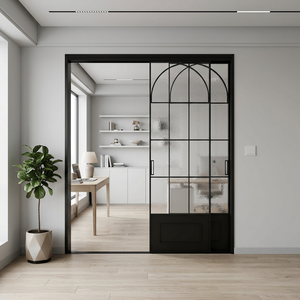
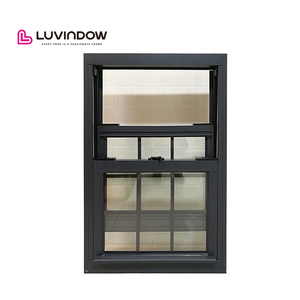
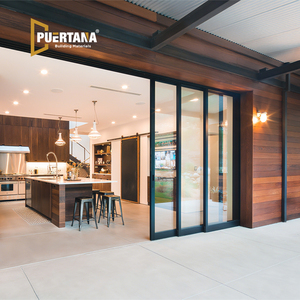
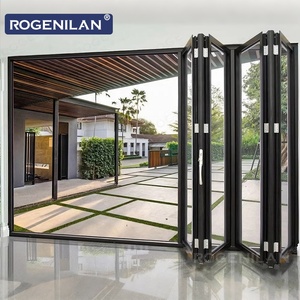
In commercial envelope restorations, historic preservation projects, and high-performance residential retrofits, aluminium insert windows—also referred to as pocket replacement windows or sub-frame insert units—offer an unrivaled balance of minimal structural disruption, superior structural stiffness, and strict thermal compliance. Below are 8 engineered fenestration and entrance solutions factory-fabricated to exact structural tolerances.
180,000m²
Production Base
25+
Years Manufacturing
600+
Specialized Technicians
100+
Patents & Global Certs
Understanding Aluminium Insert Windows: Engineering Fundamentals & Structural Mechanics
In modern commercial architecture and residential building refurbishment, the decision between complete "tear-out" fenestration replacement and aluminium insert window installations represents a crucial operational tradeoff. An aluminium insert window consists of a precision-machined, self-contained frame housing operable or fixed sashes engineered specifically to nest inside existing master timber, steel, or masonry window frames without stripping interior jamb linings, plasterwork, or exterior cladding.
From a structural physics perspective, high-performance aluminium inserts leverage extruded 6063-T5 or 6063-T6 architectural aluminium alloys engineered with multi-chambered polyamide 6.6 fiberglass-reinforced thermal breaks (PA66 GF25). These thermal barriers interrupt heat flux paths across the conductive metal substrate, driving framing heat transfer coefficients ($U_f$) down to as low as $1.1\text{ W}/(\text{m}^2\cdot\text{K})$. When paired with low-emissivity argon-filled insulated glass units (IGUs) incorporating warm-edge spacers, overall window thermal transmittance ($U_w$) comfortably surpasses European Building Regulation Part L, German Gebäudeenergiegesetz (GEG), and international ENERGY STAR® standards.
Top 10 Aluminium Insert Windows Manufacturers & Suppliers in the Global Market
To assist general contractors, facade engineers, fenestration distributors, and commercial quantity surveyors in vendor evaluation, our structural consulting team has mapped out the top 10 aluminium insert window and architectural door manufacturers globally. These suppliers demonstrate exceptional fabrication volume, third-party laboratory verification (CE, EN 14351-1, AS2047, AAMA/WDMA), and reliable lead times.
DERCHI (Guangdong Dejiyoupin)
01. Tier 1 Global / ChinaOperating from a sprawling 180,000 m² state-of-the-art intelligent manufacturing facility, DERCHI delivers custom-engineered thermally broken aluminium insert windows, oversized pivot doors, casements, and facade retrofits. Renowned for its dedicated European CET-hour technical engineering desk, free shop CAD detailing, and direct integration with premier European hardware systems (Siegenia, Roto, Hoppe).
180,000m² Plant
Uw ≤ 0.85 W/m²K
AS2047 N6 Hurricane Rated
RC2/RC3 Security
Schüco International KG
02. GermanyThe recognized global benchmark for high-performance architectural systems. Schüco’s AWS (Aluminium Window System) insert series offers market-leading thermal insulation, concealed mechatronic TipTronic fittings, and cradle-to-cradle environmental verifications for blue-chip corporate commercial developments.
AWS 75.SI+
Passive House Certified
Mechatronic Hardware
Reynaers Aluminium
03. BelgiumA dominant European innovator specializing in slim-line renovation profiles such as MasterLine 8 and SlimLine 38. Reynaers insert units recreate classic industrial steel aesthetics with thermally insulated aluminium extrusions, ideal for heritage warehouse conversions.
MasterLine 8
Steel-Look SlimLine
Bespoke Flashing Trims
Kawneer (Arconic Building Systems)
04. USA / GlobalRenowned across North America and Europe for heavy-commercial architectural envelopes. Kawneer provides robust institutional insert windows engineered for educational, healthcare, and public sector retrofits requiring high wind-load resistance and heavy cycle life.
AA®720 System
Severe Weather Impact
Heavy Commercial Grade
Wicona (Hydro Building Systems)
05. Germany / ScandinaviaPioneers in low-carbon circular aluminum systems. Wicona’s Wicline insert windows leverage post-consumer recycled alloys containing at least 75% end-of-life scrap, reducing embodied carbon to below 2.0 kg CO₂ per kg of aluminium while fulfilling stringent passive house metrics.
Hydro CIRCAL Recycled
WICLINE 75 EVO
Passivhaus Ready
Cortizo Sistemas
06. Spain / Southern EuropeWith huge extrusion capacity spanning 9 European logistics hubs, Cortizo manufactures high-spec aluminium architectural windows with slim sightlines, concealed sashes, and customizable renovation sub-frames engineered for Mediterranean to continental climates.
COR 70 Industrial
Concealed Sash Option
Extensive RAL Palette
Aluprof SA (Grupa Kęty)
07. Poland / Central EuropeOne of the fastest-growing aluminum system designers in the European Union. Aluprof provides specialized window insert profiles including the MB-79N and MB-86 systems featuring high thermal insulation, integrated smoke exhaust capabilities, and acoustic damping up to 47 dB.
MB-79N & MB-86
47 dB Sound Insulation
Smoke Control Options
Technal (Hydro Building Systems)
08. FranceA brand dedicated to sophisticated French architectural aesthetics, Technal produces the SOLEAL and TIGAL window series. Their aluminium insert solutions are highly celebrated for concealed fittings, minimalist 52mm sightlines, and specialized corrosion finishes for sea-coast sites.
SOLEAL Minimalist
Coastal Qualimarine
Concealed Drainage
YKK AP Inc.
09. Japan / Asia-PacificRenowned worldwide for micro-precision engineering and structural reliability under seismic and typhoon duress. YKK AP manufactures ultra-durable commercial aluminium insert systems widely deployed throughout high-density urban office revitalizations in Asia and the Americas.
Seismic Displacement
Anodized Precision
High Cycle Durability
Senior Architectural Systems
10. United KingdomThe largest independent British aluminium systems supplier. Their patented PURe® window series incorporates an expanded polyurethane thermal break barrier that pushes U-values lower than traditional polyamide inserts, tailored for UK educational and local council housing upgrades.
PURe® Polyurethane Core
Secured by Design
UK Part L Compliant
Architectural Fenestration Benchmark & Engineering Matrix
To ensure precision matching against client schedules, facade tender specifications must compare structural, thermal, and acoustic performance thresholds across verified test standards:
| Performance Metric | European Standard (EN) | US / Global Standard | Engineering Significance for Insert Applications | DERCHI Factory Achievable Threshold |
|---|---|---|---|---|
| Thermal Transmittance ($U_w$) | EN ISO 10077-1 / -2 | NFRC 100 / AAMA 1503 | Prevents winter perimeter draft and lowers envelope cooling loads. | Down to 0.80 W/(m²·K) (Triple Low-E + Argon) |
| Air Permeability | EN 12207 (Class 1 to 4) | ASTM E283 | Eliminates uncontrolled air infiltration through existing window cavities. | Class 4 (Exceeds 600 Pa test pressure) |
| Water Tightness | EN 12208 (Class 1A to 9A / Exxx) | ASTM E331 / E547 | Guarantees zero water egress during storm driving wind pressures. | Class E1200 (1200 Pa static water pressure) |
| Wind Load Resistance | EN 12210 (Class A1 to C5) | AS 2047 / ASTM E330 | Maintains frame structural deflection limits under severe coastal typhoons. | Class C5 / AS2047 N6 (Highest rating) |
| Acoustic Attenuation ($R_w$) | EN ISO 717-1 | ASTM E413 (STC / OITC) | Crucial for airport corridors, busy downtown arterial hotels, and villas. | Up to 48 dB (Laminated acoustic acoustic interlayer) |
| Burglar Intrusion Resistance | EN 1627 (RC1 to RC4) | PAS 24 / ASTM F588 | Multi-point mushroom cam locking and anti-jemmy security plates. | RC2 / RC3 Verified |
Future Sourcing & Procurement Trends for Aluminium Window Inserts (2025–2035)
Procurement workflows within commercial construction are moving away from ad-hoc site measures toward standardized digital scheduling, certified ESG reporting, and accelerated factory prefabrication. Forward-thinking general contractors and real estate development groups evaluate the following shifts when securing their multi-year supply contracts:
Circular Aluminium & EPD Audits
Tenders in Europe and North America increasingly penalize high-carbon primary smelters. Suppliers must furnish third-party verified Environmental Product Declarations (EPDs), incorporating green hydroelectric smelting or scrap fractions above 75%.
BIM-Driven Offsite Fabrication
Laser 3D point-cloud survey files are converted directly into CNC machining coordinates via IFC/Revit models. Insert frames arrive tagged with custom sub-cill anchors, eliminating on-site trimming and reducing installation hours per opening by 60%.
Direct OEM Tier-1 Supply Chains
Contractors are bypassing intermediary sales agents, contracting directly with vertically integrated industrial producers like DERCHI. This provides transparent factory audit trails, milestone-based sea freight, and cost efficiencies up to 35%.
Architectural Design & Technology Trends
The engineering of modern insert fenestration has evolved far beyond rudimentary square frames. Leading architectural firms demand sophisticated aesthetics harmonized with cutting-edge mechatronics:
Ultra-Narrow Sightlines (<32mm)
By designing stepped structural glazing beads and concealed operable sashes, visible frame perimeters are minimized. This design maximizes natural daylight transmittance (VLT) while preserving clean modern sightlines in retrofit projects.
Integrated IoT Sensor Mechatronics
Concealed 24V DC micro-actuators embedded inside the window frame profile communicate with the building management system (BMS), driving automated night purge ventilation, automated shading, and acoustic intrusion monitoring.
Vacuum Insulated Glass (VIG) Inserts
Replacing bulky triple-pane units, 8.3mm tempered vacuum glass delivers center-of-glass $U_g$ values down to 0.45 W/(m²·K). This allows ultra-shallow insert depth without overloading historic existing wall framing members.
Direct Manufacturer Strength
DERCHI: The Architectural Partner for Global Envelope Execution
Guangdong Dejiyoupin Doors and Windows Co., Ltd. (DERCHI) stands among the top-tier fenestration manufacturers in China, backed by over 25 years of specialized engineering and an expansive 180,000 m² modern manufacturing campus in Foshan.
- Full International Certification Coverage: Fully documented CE marking (EN 14351-1), ISO 9001 quality systems, Australian AS2047 N6 cyclonic testing, and UL fire-barrier listings for rapid building control signoff.
- Dedicated European & US Engineering Desks: Multilingual sales and structural facade engineers working aligned with CET/GMT and US business hours, providing free shop CAD revisions matched to site schedules.
- End-to-End Bespoke Fabrication: Over 30 patented profile innovations covering thermally broken insert casements, luxury solid wood pivots, high-cycle bifold doors, and concealed pocket systems.
- Export Packing & Port Freight Reliability: Reinforced export-grade marine plywood crating and moisture-sealed shrink wrapping directly routed to major container terminals (Rotterdam, Hamburg, Felixstowe, Long Beach, Sydney).


Frequently Asked Questions: Aluminium Insert Windows Procurement
1. What distinguishes an "insert window" from a full frame replacement?
A full-frame replacement requires removing the entire existing window, including the interior trim, exterior brick mould, and sill, often disturbing surrounding interior finishes. An insert window fits directly inside the existing, structurally sound outer master frame. This preserves exterior brickwork, historic stone surrounds, and interior interior trims, reducing overall installation time and cost per opening by 40% to 60%.
2. How do thermally broken aluminium inserts prevent perimeter condensation?
Uninsulated aluminium has high thermal conductivity ($k \approx 160\text{ W}/(\text{m}\cdot\text{K})$). Modern inserts incorporate polyamide 6.6 fiberglass structural struts (PA66 GF25) separating the interior and exterior profile sections. This creates a thermal barrier that prevents interior frame surface temperatures from dropping below the dew point, eliminating condensation issues even in sub-zero winter conditions.
3. Do DERCHI windows meet European CE marking and EN 14351-1 harmonized requirements?
Yes. Every production run destined for the European market complies with EN 14351-1. DERCHI provides factory Declaration of Performance (DoP) certificates, factory production control documentation under ISO 9001, and specific lab test summaries verifying air permeability, water tightness, wind load resistance, and overall thermal transmittance ($U_w$) calculations.
4. What tolerances and perimeter clearances should be specified when taking site measurements for inserts?
Due to settling in older buildings, existing master frames are frequently out of square. We recommend taking three horizontal measurements (top, middle, bottom) and three vertical measurements (left, center, right), subtracting 6mm to 10mm (1/4" to 3/8") from the smallest width and height dimensions. This perimeter gap allows for shim alignment, backer-rod thermal expanding foam, and external elastomeric weather sealant beads.
5. Can custom powder coating match heritage building standards (Qualicoat / RAL)?
Yes. All DERCHI aluminium extrusions can be finished in any standard RAL Classic or RAL Design hue, Qualicoat Class 1 or Class 2 architectural powders, textured finishes, or marine-grade anodizing (minimum 25 microns for coastal corrosion defense). Dual-color configurations—allowing one finish on the exterior face and a different color or wood-grain transfer on the interior—are standard options.
6. How does factory packing protect assembled aluminium frames during sea shipping?
Finished window and door assemblies are wrapped in multi-layer protective PE film, reinforced with high-density EVA corner protectors, bundled in water-impermeable shrink wrap, and packed inside fully enclosed non-coniferous fumigated plywood crates. Crates feature integrated forklift skid runners and balance indicators to ensure safe port container handling and cross-docking.
7. What is the typical lead time from final CAD shop drawing sign-off to container dispatch?
Standard custom project orders require approximately 25 to 35 working days for fabrication, thermal barrier rolling, powder coat curing, robotic glass assembly, and multi-point function testing. Expedited schedules for commercial mockups or phased deliveries can be arranged with our engineering planning department.
8. What warranty coverage applies to DERCHI aluminium insert systems?
DERCHI provides a 10-year comprehensive warranty on structural aluminium frames, powder coat adhesion, and anodized surface finishes against peeling, flaking, or chalking. Insulated glass units carry a 10-year warranty against seal failure or internal fogging, while mechanical operating hardware (Siegenia, Roto, DERCHI hardware) is warranted for 5 to 10 years of smooth cycle performance.