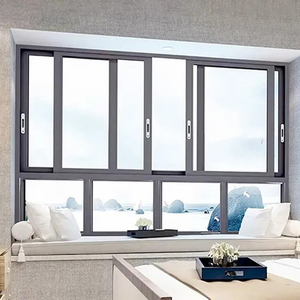
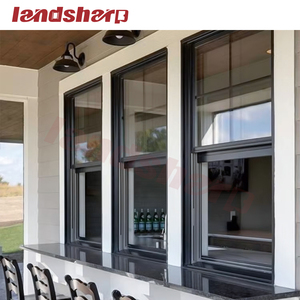
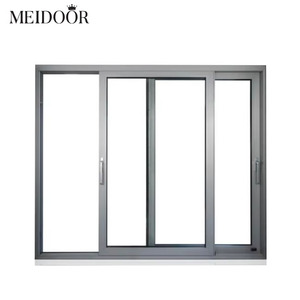
Modern Design Style Aluminum Alloy Heat-Insulated Broken Bridge Vertical Sliding Doors Windows Apartment
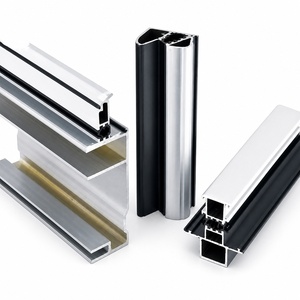
- Profile Alloy: 6063-T5 Thermal Break
- Thermal Barrier: 24mm PA66-GF25
- Air Tightness: EN 12207 Class 4
In modern high-performance building envelopes, aluminum wrapping windows (composite aluminum-clad systems, thermal barrier wrapped extrusions, and architectural exterior shielding) represent the pinnacle of durability and thermodynamic efficiency. By fusing exterior architectural-grade aluminum alloy profiles with optimized thermal insulation barriers or composite structural cores, these systems eradicate thermal bridges, resist severe climatic decay, and comply with strict carbon-reduction codes worldwide.
From an architectural engineering perspective, aluminum wrapping refers to precision roll-forming and composite extrusion techniques where an exterior protective jacket of 6063-T5 or 6063-T6 virgin aluminum alloy (thickness ≥ 1.8mm – 2.2mm) is mechanically locked or thermal-break bonded over reinforced polyamide (PA66-GF25) strips, multi-chamber UPVC, or solid timber substrates. This prevents moisture ingress, expansion mismatch, and dimensional warpage under extreme temperature differentials (−40°C to +80°C).
Contact UsExplore our certified portfolio of thermal break vertical sliders, heavy-duty panoramic stackers, fire-rated safety escape systems, and precision custom extrusions manufactured directly in our Foshan industrial plant.
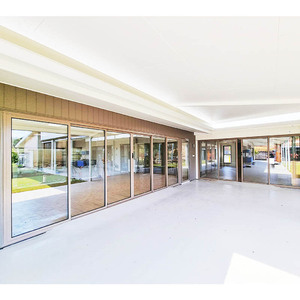
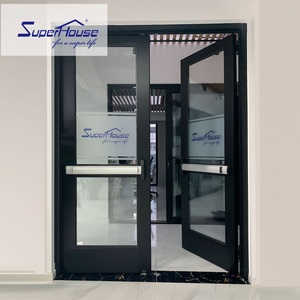
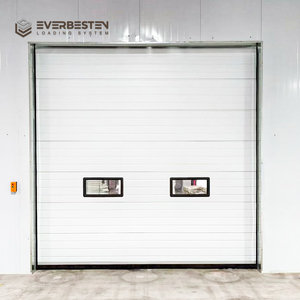
Founded in Foshan — the world's most sophisticated capital of architectural aluminum production — Guangdong Dejiyoupin Doors and Windows Co., Ltd. (DERCHI) ranks among China’s Top 10 premium door and window manufacturing enterprises. Spanning an expansive 180,000 square-meter production facility staffed by over 600 skilled technicians, we integrate automated aluminum extrusion, high-precision thermal wrapping lines, CNC multi-axis milling, and dual-component silicone glazing.
Our industrial engineering capability is evidenced by rigorous international project deployments: a UK-based long-term partner of German Schüco selected DERCHI to manufacture comprehensive window and door packages for multi-villa luxury developments. With over 30 proprietary patents and certifications spanning CE, ISO 9001, AS 2047, and UL fire standards, we deliver Western engineering precision with factory-direct cost advantages.

From aluminum ingot die extrusion and surface anodizing/powder coating to composite wrapping assembly and insulating glass unit fabrication, 100% of the manufacturing chain remains in-house.
Engineered to satisfy stringent global benchmarks: EN 14351-1 CE marking for Europe, AS 2047 N6 cyclonic testing for Australia, and ASTM/AAMA wind & water penetration standards for North America.
Our dedicated engineering department drafts tailored shop drawings, wind-load deflection calculations, structural jamb details, and thermal simulation isotherm profiles before metal is cut.
Turnkey maritime containerization utilizing vapor-sealed barrier wrapping, individual steel A-frame crating, corner shock-absorption pads, and fumigated timber crating direct to major deepwater ports.
Achieving superior whole-window U-factors (Uw ≤ 0.8 to 1.3 W/m²·K) requires deep metallurgical and mechanical synergy between the exterior aluminum skin and internal structural elements.
We deploy primary A00 aluminum alloy extruded into 6063-T5/T6 configurations with precise silicon, magnesium, and iron tolerances. This chemistry guarantees high tensile yield strength (≥ 160 MPa), enabling ultra-narrow sightlines that bear hurricane wind loads up to 5000 Pa without structural deflection.
Unlike basic snap-fit cladding prone to thermal fatigue, our wrapping methodology employs knurled mechanical rolling that embeds 24mm–34mm glass-fiber reinforced polyamide (PA66-GF25) thermal struts. This creates an impermeable thermal barrier mitigating the bimetallic effect caused by diurnal temperature swings.
Exposed architectural wrapping surfaces are treated via chrome-free chemical conversion followed by either Qualicoat Class 2 / AAMA 2604/2605 PVDF fluorocarbon coatings or 25μm hard anodization. This shields profiles against acid rain, UV photolysis, and marine salt-fog corrosion (tested > 3,000 hrs ASTM B117).
| Performance Parameter | DERCHI Heavy Aluminum Wrapping | Standard Non-Broken Aluminum | Solid UPVC / Vinyl Windows | Solid Timber (Unclad) |
|---|---|---|---|---|
| Thermal U-Factor (Frame Uf) | 1.1 – 1.6 W/(m²·K) (Passive House) | 5.8 – 7.0 W/(m²·K) (Severe Loss) | 1.3 – 1.8 W/(m²·K) | 1.4 – 1.9 W/(m²·K) |
| Structural Wind Load (Deflection) | ≥ 4.5 – 5.5 kPa (High-Rise Ready) | ≥ 3.0 kPa | 1.5 – 2.5 kPa (Steel reinforced) | 2.0 – 3.0 kPa |
| Weathering Lifespan | 40 – 50+ Years (Zero Rot / Warpage) | 30 Years (Thermal stress leaks) | 15 – 20 Years (UV embrittlement) | 10 – 15 Years (Requires repaint) |
| Air Tightness (EN 12207) | Class 4 (Highest EU Specification) | Class 2 – 3 | Class 3 – 4 | Class 3 |
| Water Penetration Resistance | ≥ 700 – 900 Pa (Severe Storm Rated) | ≤ 300 Pa | ≤ 450 Pa | ≤ 450 Pa |
| Acoustic Attenuation (Rw) | Up to 45 – 48 dB (Acoustic Glazed) | 28 – 32 dB | 32 – 36 dB | 34 – 38 dB |
Architects, large-scale general contractors, and building component distributors are transforming how they source fenestration products from China. Forward-thinking procurement strategies now focus on decarbonization, smart hardware integration, and digital supply-chain transparency.
International tenders increasingly require Environmental Product Declarations (EPDs). Global procurement mandates the utilization of primary aluminum smelted with renewable hydroelectric energy, producing less than 4.0 kg CO2 per kg of aluminum ingot, compared to coal-fired industry baselines exceeding 12 kg CO2.
Architects prioritize maximum daylight transmittance. Future wrapping designs feature invisible concealed vent frames, flush exterior sills, and sub-45mm interlockers, enabling floor-to-ceiling glass installations that retain full wind and thermal envelope ratings.
Automated building management demands factory-routed cabling channels within the thermal break profile cavity. Modern window packages now integrate concealed brushless chain actuators, motor locks, and rain/wind automated ventilation sensors.
To comply with net-zero and Passive House regulations, window profiles are engineered with deep glazing rebate pockets (up to 52mm). This accommodates triple-pane low-E glass with warm-edge TGI spacers or ultra-slim VIG units that achieve center-of-glass Ug ≤ 0.5 W/(m²·K).
Traditional manual miter saws are being replaced by German and Italian 5-axis CNC machining centers. Robotic corner crimping with dual-component expanding polyurethane injects exceptional mechanical rigidity into frame joints, eliminating site water ingress.
Distributors and property developers bypass trading intermediaries. Working directly with manufacturing partners like DERCHI, foreign buyers receive native Autodesk Revit BIM models, structural wind-load test certificates, and scheduled container tracking.
Every custom aluminum wrapping window and door system undergoes rigorous quality audits before export dispatch.
Primary A00 aluminum heated to 480°C, extruded, air-quenched, and artificially aged to Webster hardness ≥ 12-14 HW.
Precision knurling wheels profile teeth into slots; PA66-GF25 thermal strips are mechanically clamped via tri-roller rolling mills.
Digital 45° and 90° cutoffs within ±0.1mm tolerance; automated corner cleat insertion with German Henkel joint adhesive.
In-house pressure chamber verifies zero water ingress at 600 Pa. Profiles get wrapped in protective tape, corner-guarded, and crated.
Critical engineering, logistics, and certification queries addressed by our technical sales engineers.