Recommended Architectural Aluminium Door & Window Series
Certified fenestration solutions tested to EN, AS 2047, and North American architectural standards for residential developments, luxury villas, and commercial spaces.
Architectural Engineering Insights: The Technical Supremacy of Aluminium Half Glass Doors
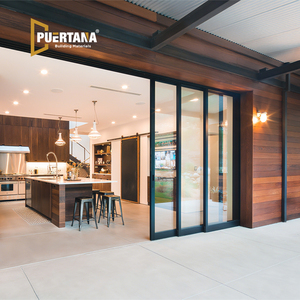
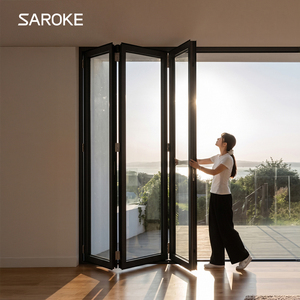
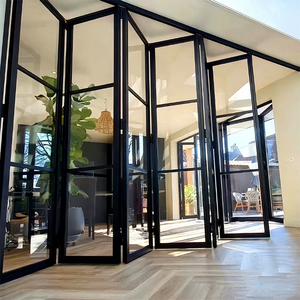
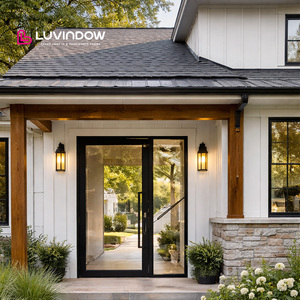
In modern architectural building envelopes, the aluminium half glass door—frequently specified as a semi-glazed entrance, mid-rail terrace portal, or acoustic utility partition—occupies a critical junction between mechanical structural rigidity and optical transparency. Unlike monolithic glazed curtain units or solid cast aluminium barrier doors, half glass configurations engineer an equilibrium: solid lower structural paneling protects against foot traffic, debris impact, and hydraulic splashback, while the upper glazed aperture admits calibrated natural daylighting without surrendering acoustic or perimeter barrier integrity.
For international tier-1 builders, architects, and fenestration import wholesalers, procuring high-performance half glass doors necessitates an intimate comprehension of alloy metallurgical chemistry, polyamide structural breaks, glass lamination acoustics, and wind-load deflection metrics. Below is an engineering overview of critical specification parameters governed by international testing protocols.
| Performance Dimension | Reference Metric / Standard | Engineering Specification (DERCHI Standard) | Project Impact & Life Cycle Value |
|---|---|---|---|
| Alloy Metallurgy & Wall Gauge | EN 755-9 / 6063-T5 or T6 | Primary extrusion wall 2.0mm – 3.0mm; high tensile resistance | Prevents door leaf deflection under continuous cyclic wind load and seismic sway. |
| Thermal Insulation (U-Factor) | EN ISO 10077-2 / DIN 4108 | Ud values down to 1.1 W/(m²·K) via 24mm–34mm PA66GF25 bars | Complies with European Energy Performance of Buildings Directive (EPBD) & German GEG. |
| Acoustic Attenuation | ISO 717-1 / ASTM E90 | Rw (C; Ctr) = 38 dB to 44 dB with acoustic PVB interlayers | Reduces traffic and urban ambient decibel intrusion significantly in mixed-use residential zones. |
| Perimeter Burglar Resistance | EN 1627 - 1630 (RC2 / RC3) | Multi-point hook deadbolts with 304/316 stainless strike plates | Prevents jemmy and mechanical forced entry, fulfilling underwriter insurance prerequisites. |
| Weather Sealing & Water Ingress | EN 12208 (Class 9A) / AS 2047 N6 | Continuous EPDM cellular co-extruded gaskets + low drop-down thresholds | Zero water penetration under dynamic wind driving pressures exceeding 600 Pa. |
Emerging Procurement & Sourcing Trends in Architectural Fenestration
The global facade and entry door supply chain is transitioning rapidly from fragmented artisanal fabrication to industrial-scale digital customization. B2B procurement heads and structural quantity surveyors are aligning procurement matrices with three prominent industry trends:
1. BIM-Driven Collaborative Sourcing
Architectural firms mandate exact 3D BIM (Building Information Modeling) objects and IFC parameter integration early in the design stage. Sourcing decisions favor manufacturers capable of providing parametric CAD shop drawings, precise cut-sections, and custom sill details that prevent structural clashes on-site.
2. Zero-Carbon & Thermal Barrier Mandates
Tightening municipal regulations (such as UK Building Regs Part L and European nZEB mandates) eliminate uninsulated profiles. Buyers increasingly require documented Environmental Product Declarations (EPDs), recycled aluminium billet content, and advanced warm-edge spacer glazing units.
3. Factory-Integrated Hardware & IoT Access
The practice of sourcing door frames from one exporter and mortise locks from another is declining due to tolerance mismatch issues. Modern developers demand pre-drilled, pre-hung packages with integrated concealed door closers, magnetic gaskets, and biometric access integration ready for rapid installation.
Future Technology & Design Evolution in Aluminium Glass Systems
Looking into the coming decade, the engineering of aluminium half glass doors is advancing beyond simple mechanical boundaries:
- Structural Glazing Adhesives: Traditional mechanical bead clamping is being supplemented with structural silicone bonding, creating flush glass-to-aluminium transitions with clean sightlines and enhanced racking strength against wind gusts.
- Dynamic Switchable Privacy Glazing: PDLC (Polymer Dispersed Liquid Crystal) smart glass laminates are replacing internal blinds inside half glass doors, allowing instant transitions from clear daylight transmission to complete privacy via low-voltage automation.
- Fluorocarbon & Qualicoat Seaside Class 3 Finishes: Hyper-durable PVDF (Polyvinylidene Fluoride) coatings and specialized marine-grade powder coats ensure 30+ year resistance against severe saline corrosion, UV chalking, and acid precipitation in harsh coastal villa installations.
Manufacturer Advantages: Why Partner with DERCHI Doors & Windows
Guangdong Dejiyoupin Doors and Windows Co., Ltd. (DERCHI) operates as a premier door and window engineering hub based in Foshan, Guangdong. Backed by over a quarter-century of technical experience and a massive 180,000 m² modern manufacturing infrastructure, DERCHI bridges the gap between cost-efficient mass manufacturing and precise custom architectural engineering.
Full In-House Engineering & CAD
Our engineering department converts complex door schedules and architectural sketches into production-ready CAD shop drawings. Every joint detail, threshold water drain, and wall anchor detail is verified before factory extrusion cutting begins.
Tier-1 Global Compliance
DERCHI fenestration products are systematically tested and certified against CE (EN 14351-1), ISO 9001, AS 2047 (rated to highest N6 wind loading in Australia), and North American UL fire test standards, streamlining local council approvals.
Export-Grade Heavy Packaging
International sea logistics demand absolute protection. DERCHI employs multi-layer high-density pearl cotton wrapping, edge impact guards, and heat-treated solid timber crates with desiccant packaging to guarantee damage-free arrival at destination ports.
Frequently Asked Questions: Global Procurement & Engineering
Technical and commercial clarity for commercial buyers, developers, facade consultants, and fenestration import distributors.
What custom glass configurations can be integrated into the half glass door leaves?
DERCHI offers fully customizable glazing packages including dual or triple-glazed insulated units (IGU), argon gas fills, tempered Low-E safety glass, frosted obscurity panels, acoustic PVB/SGP laminated security glass, and integrated internal architectural grills or decorative muntins matching local architectural styles.
How does DERCHI manage thermal expansion in large aluminium door profiles?
Our thermally broken systems utilize multi-chamber polyamide (PA66GF25) structural insulation strips that mitigate thermal bridging. These strips accommodate independent differential expansion between the interior and exterior aluminium faces in extreme thermal ranges (-30°C winter to +45°C summer), eliminating sash warping.
What is the typical manufacturing lead time for containerized project shipments?
Following architectural CAD shop drawing sign-off and finish sample approval, production lead time ranges between 25 and 35 working days. For multi-villa programs or custom color requirements (custom RAL matching), staged container dispatches can be scheduled to match concrete frame curing and installation phases on-site.
Do DERCHI systems satisfy water ingress resistance in open, wind-exposed locations?
Yes. DERCHI doors incorporate continuous multi-point compression seals, stepped threshold drainage channels, and concealed weeping valves with one-way wind dampers. Tested up to AS 2047 and EN 12208 Class 9A, our units effectively prevent water ingress even under severe coastal driving storms.