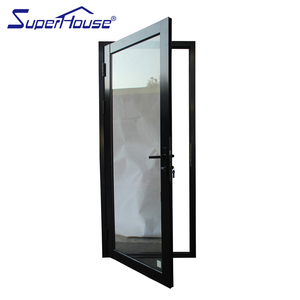
Miami NOA Approved Modern Hurricane Proof Impact Resistance Triple Glazed Aluminum Patio Door
- NOA Hurricane TAS 201/202/203
- Triple Glazed Low-E Argon Core
- Design Pressure: +/- 70 PSF
Engineered to satisfy stringent global regulatory frameworks including Miami-Dade County NOA, European EN 14351-1, and Australian AS 2047 benchmarks. Each model integrates structural alloy extrusions with thermal and acoustic insulation barriers.
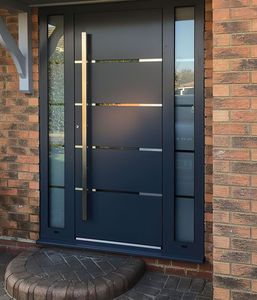
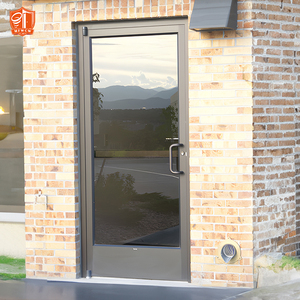
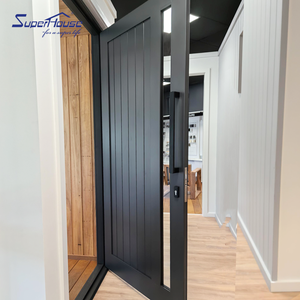
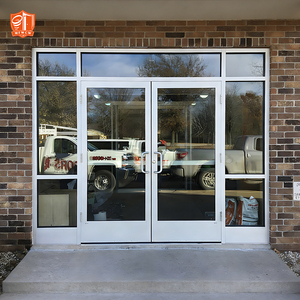
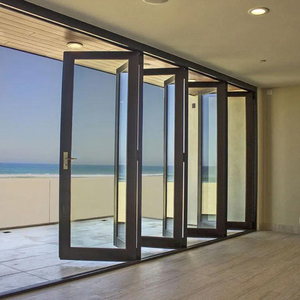
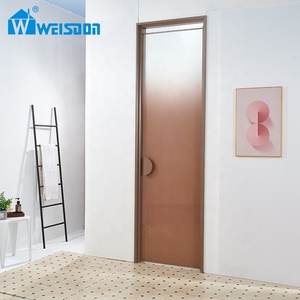
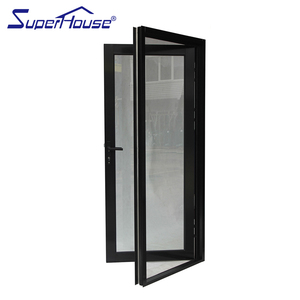
Ranked among China's Top 10 premium architectural fenestration brands, our Foshan smart manufacturing campus bridges heavy industrial production with custom European engineering discipline.
Vertically integrated extrusion, coating, glazing & assembly bays in Foshan, Guangdong.
Continuous technical evolution from basic profiles to multi-point architectural assemblies.
Over 30 proprietary utility patents alongside ISO 9001, CE, AS 2047, and UL fire certifications.
Dedicated bilingual CAD designers, structural facade engineers, and ISO certified QA auditors.
We supply complete shop drawings, structural wind load calculations, deflection simulations, and thermal FEA models. Our engineering department synchronizes directly with architectural BIM schedules to eliminate on-site fitting variances.
Vetted and selected by long-term European building partners, our doors match leading German systems in tolerances, weather tightness, and cycle longevity at competitive factory-direct direct-to-site supply dynamics.
Comprehensive documentation packages covering EU Declarations of Performance (DoP under EN 14351-1), US AAMA/WDMA/CSA fenestration testing, Australian AS 2047 N6 cyclonic approvals, and Florida High-Velocity Hurricane Zone (HVHZ) protocols.
Consolidate your entire door package under one roof: large-format thermal pivot doors, motorized sliding glass systems, cast aluminum security gates, fire-rated utility doors, and custom curtain wall interfaces for maximum project efficiency.
A comprehensive analysis of structural metallurgy, poly-thermal breakthroughs, strict building energy codes (Net-Zero/Passive House), and international supply chain risk management.
The architectural fenestration sector is navigating a generational transition toward hyper-efficient, highly engineered thermal envelopes. Historically, aluminum alloys were scrutinized for high thermal conductivity (approximately 160 to 200 W/m·K for raw 6063 alloys). Today, the integration of advanced multi-chamber structural insulating polyamides (PA66 GF25—polyamide 6.6 reinforced with 25% glass fiber) has revolutionized this equation. Modern thermal breaks feature widths exceeding 34mm to 45mm, incorporating low-emissivity insulation foams (polyurethane or aerogel inserts) that suppress radiant and convective heat transfer inside profile voids.
In parallel, metallurgical advancements in 6063-T6 and 6061-T6 structural alloys provide tensile yield strengths exceeding 215 MPa. This structural capacity empowers architects to specify ultra-slim sightlines (often less than 30mm visible profile face) while accommodating oversized glass panels exceeding 4,000mm in vertical height and weights over 600 kg. Surface finishing has shifted toward fluorocarbon PVDF (polyvinylidene fluoride) liquid electrostatic coatings and Qualicoat Class 2/3 architectural super-durable powder systems, ensuring corrosion and salt-fog resistance exceeding 3,000 to 5,000 hours under ASTM B117 standards.
| Performance Dimension | Standard Commercial Grade | Architectural High-Performance Grade | DERCHI Engineered Standard |
|---|---|---|---|
| Alloy Matrix & Temper | 6063-T5 (Yield: ~110 MPa) | 6063-T6 / 6061-T6 (Yield: 170-205 MPa) | Primary Billet 6063-T6 (Yield ≥ 215 MPa) |
| Thermal Barrier Core | 14.8mm PVC or Low-Grade Polyamide | 24mm PA66 GF25 Multi-Chamber | 34mm - 45mm Technoform PA66 GF25 + Aerogel |
| Thermal Transmittance (UD) | 2.8 - 3.5 W/(m²·K) | 1.4 - 1.8 W/(m²·K) | ≤ 0.85 - 1.1 W/(m²·K) (Passive House Capable) |
| Weather Tightness (EN 12208) | Class 4A (150 Pa water test) | Class 7A - 9A (300 - 600 Pa) | Class E900 - E1200 (≥ 900 - 1200 Pa) |
| Wind Load Resistance (EN 12210) | Class B2 (800 Pa) | Class C3 - C4 (1200 - 1600 Pa) | Class C5 / AS 2047 Cyclonic N6 (≥ 2000 Pa) |
| Hardware & Cycle Endurance | Standard domestic friction stays (25k cycles) | Single-point locksets (100k cycles) | German Siegenia/G-U Multi-Point (500k-1M cycles) |
Procurement leaders, general contractors, and quantity surveyors are fundamentally restructuring their supply criteria when sourcing aluminum alloy doors from overseas manufacturers. Three macro factors dominate modern tender specifications:
Mitigate raw material price volatility through factory forward contracts on LME aluminum pricing. Working with a 180,000 m² scaled manufacturer ensures stable material inventory buffers during major project build phases.
Avoid costly regulatory rejections by ensuring the overseas manufacturer possesses verified third-party laboratory test reports for your target jurisdiction (AAMA/WDMA for North America, CE EN 14351 for Europe, AS 2047 for Oceania).
Structural entrance doors require reinforced export timber crates lined with moisture-barrier film and high-density EPE foam cushions. This preserves critical alignment tolerances (±0.5mm) across long-distance sea freight.
Essential technical, regulatory, and logistics answers compiled by our senior structural fenestration engineers to streamline your procurement due diligence.
We utilize knurled mechanical crimping machines to join our 6063-T6 aluminum profiles with genuine Technoform or equivalent polyamide PA66 GF25 strips. Each batch undergoes rigorous transverse tensile pull testing and shear tests in compliance with EN 14024. This mechanical bond withstands extreme thermal cycling (-40°C to +80°C) without delamination or shear displacement.
Yes. Our Miami NOA hurricane series is engineered and tested in accordance with TAS 201 (Large Missile Impact), TAS 202 (Uniform Structural Load), and TAS 203 (Cyclic Wind Pressure Loading). Equipped with Kuraray SentryGlas (SGP) laminated structural interlayers and heavy-gauge reinforced extrusions, our assemblies withstand cyclic impacts exceeding ±70 PSF.
Following receipt of structural drawings or door schedules, our engineering division delivers approved bilingual shop drawings within 3 to 5 business days. Typical fabrication lead times are 25 to 35 calendar days for standard anodized and powder-coated finishes, and 35 to 45 days for specialized fluorocarbon PVDF, custom timber cladding, or large-dimension pivot leaf assemblies.
For European and UK deliveries, we provide comprehensive Factory Production Control (FPC) documentation, CE marking, and Declaration of Performance (DoP) dossiers under harmonized standard EN 14351-1. Glazing units carry EN 1279 IGCC seals, and safety glass complies with EN 12150 and EN 14449 laminated standards.
Our heavy-duty pivot systems (supporting leaves up to 650 KG and widths up to 2.5 meters) incorporate German DORMA or Geze floor-concealed hydraulic pivot boxes paired with top needle-roller guide bearings. The rotational pivot axis is mathematically calculated based on panel mass distribution, allowing full-span architectural doors to be operated with less than 15 Newtons of opening force.
For marine and coastal environments (C4/C5 atmospheric corrosivity categories according to ISO 12944), we provide Class 1 anodizing (minimum 20-25 microns film thickness) or three-coat fluorocarbon PVDF finishes with 70% Kynar 500 resin systems that satisfy AAMA 2605 criteria, accompanied by documented 15 to 20-year colorfast warranties.
Each door unit undergoes a 100% pre-assembly quality checkpoint: laser alignment verification for squareness (≤ 1mm diagonal variance), air-tightness seal continuity checks, hardware multi-point locking actuation tests, and glass optical distortion audits. High-resolution factory inspection reports and video documentation are forwarded to project managers prior to crating.
Yes. We engineer internal concealed conduit pathways within the aluminum door frames and leaves to accommodate motorized multi-point locksets, motorized drop-down weather seals, electric strikes, concealed door loop transfers, and biometric readers. Our technical team works directly with your low-voltage electrical contractors to ensure clean plug-and-play installation.
Upload your architectural drawings, tender schedules, or custom fenestration specifications. Our Foshan engineering team will prepare shop drawings, thermal calculations, and competitive factory-direct quotations within 24 hours.