Precision-Engineered Architectural Systems & Cupboard Components
Engineered for high-traffic hospitality, luxury multi-family developments, and bespoke residential cabinetry with aerospace-grade 6063-T5 aluminum framing.
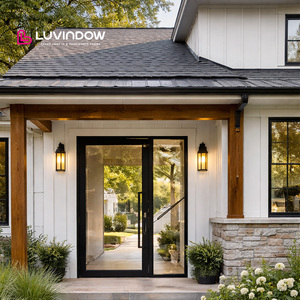
Soundproof Aluminum Double Glazed Residential Door
View Specifications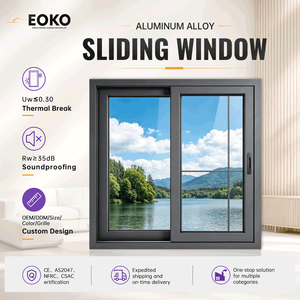
EOKO Commercial Double Glazed Sliding Window Series
View Specifications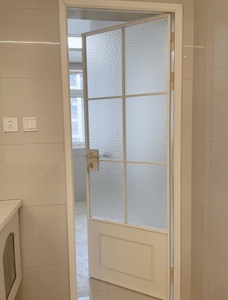
Minimalist Crittall Style Interior Cupboard & Partition Door
View Specifications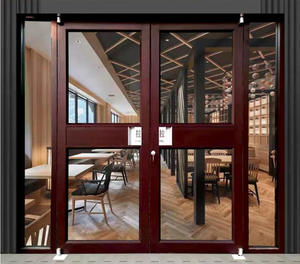
Modern Commercial Aluminum Entry Door With Sidelights
View Specifications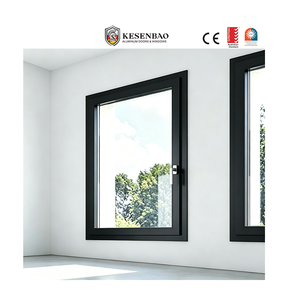
Custom Double Glazed Casement System With Integrated Screens
View Specifications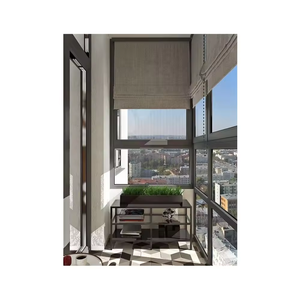
Fuson Private Label Modular Sliding Frame Assembly
View Specifications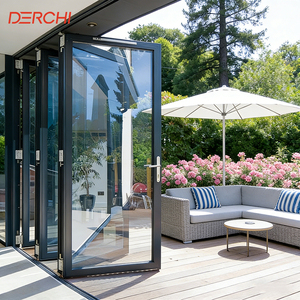
Outdoor & Pantry Aluminum Vertical Stacking Bi-Fold Doors
View Specifications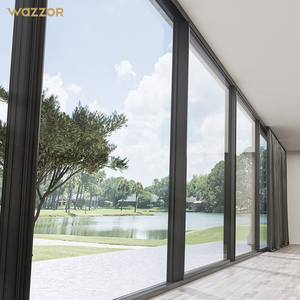
Wazzor Double Glazed Sliding Door & Cabinetry System
View Specifications1. The Structural Evolution: Why Commercial Cabinetry is Transitioning to Extruded Aluminum
For decades, commercial and residential cabinetry specifications were dominated by wood derivatives: Medium-Density Fiberboard (MDF), particleboard, and cross-laminated plywood. While cost-effective for basic residential developments, these organic substrates present chronic mechanical failure points in demanding environments. Moisture infiltration causes irreversible core swelling, adhesive delamination occurs under elevated thermal cycling, and continuous fastener torque leads to hinge pull-out and panel sagging.
Top-tier architectural firms, luxury hotel developers, and institutional builders have systematically restructured their master specifications to prioritize architectural aluminum cupboard doors. Utilizing 6063-T5 and 6061-T6 structural aluminum alloys, these advanced door assemblies achieve tensile yield strengths exceeding 160 MPa while maintaining ultra-lightweight linear densities. The thermal expansion coefficient of precision aluminum extrusions remains dimensionally stable under ambient swings from -30°C to +80°C, eliminating the seasonal warping, joint cleavage, and binding that plagues wooden millwork.
| Performance Characteristic | Architectural Aluminum (6063-T5) | Standard High-Moisture MDF | Bespoke Hardwood Core |
|---|---|---|---|
| Dimensional Stability (RH 95%) | Zero Swelling / 100% Inert | Thickness expansion > 8.0% | Volumetric warping > 3.5% |
| Combustibility / Fire Class | EN 13501-1 Class A1 Non-combustible | Class D-s2, d0 (Combustible) | Class D (Untreated Timber) |
| Volatile Organic Compounds (VOC) | Zero Formaldehyde (0.0 mg/m³) | E1 / CARB Phase 2 compliant | Dependent on applied lacquers |
| Service Life Cycle (Cycles) | > 200,000 Open/Close Cycles | approx. 35,000 Cycles before hinge degradation | approx. 50,000 Cycles before hinge creep |
| Corrosion & Mildew Resistance | Complete Biostability (ASTM B117) | High vulnerability to black mold | Requires antifungal treatment |
Furthermore, the environmental mandate across the European Union, the United Kingdom (Building Regulations Part L), and North America (LEED v4.1 certifications) has accelerated the demand for circular manufacturing. Aluminum profiles engineered by premier Chinese factories such as Guangdong Dejiyoupin Doors and Windows Co., Ltd. (DERCHI) leverage closed-loop recycled billets, achieving up to 95% embodied carbon reduction compared to primary virgin smelting, without compromising structural crystal purity.
2. Future Sourcing Trends: The 2025–2030 Aluminum Cupboard Procurement Playbook
Global procurement teams must navigate evolving regulatory frameworks, carbon taxation schemes (such as the EU Carbon Border Adjustment Mechanism - CBAM), and sophisticated architectural demands. Procuring aluminum cupboard door systems no longer centers purely on per-square-meter unit cost; enterprise supply chain directors focus on total cost of ownership (TCO), automated integration, and modular site assembly.
Low-Carbon Recycled Billets
Procurement mandates require audited Environmental Product Declarations (EPD) verifying secondary smelting processes and clean hydro-electric refining to mitigate CBAM tariffs entering European seaports.
Dry-Glaze Modular Jointing
Elimination of wet structural silicones on the job site. Factory-fitted co-extruded santoprene and EPDM micro-gaskets enable swift on-site glass replacement in less than 3 minutes per leaf.
BIM & Parametric CAD Supply
Tier-1 factories now supply parametric Autodesk Revit and IFC files directly within RFQ responses, ensuring that wall-tolerance clashes and hinge cutouts are resolved digitally prior to tooling.
Surface Metallurgy: Beyond Traditional Powder Coating
The standard procurement specification of 40-micron decorative paint is obsolete for institutional projects. Forward-looking project specifications require Qualicoat Class 2 / Class 3 Super-Durable architectural powders or Qualanod-certified architectural hard-coat anodization with minimum 20-micron film depths. These coatings withstand 3,000 hours of continuous neutral salt spray (ASTM B117) and provide pencil hardness ratings exceeding 3H, completely resisting key scratches, industrial solvent cleaning, and airborne coastal chlorides.
3. Technological Breakthroughs: Kinematics, Micro-Sightlines & Material Fusion
Modern luxury interior architecture hinges on the concept of visual disappearance: the structural frame must vanish, leaving only the material texture of tinted glass, porcelain ceramic stoneware, fluted architectural mirrors, or carbon-fiber laminates. To achieve this, aluminum profile engineering has undergone three distinct technical paradigm shifts:
Ultra-Thin 8mm Bezel Extrusions
By engineering internal structural stiffening ribs and micro-chambered web geometries, factories can produce door profiles with an external sightline of only 8mm to 12mm that comfortably support 45kg glass weights without bowing.
Concealed 3D Adjustable Pivot Hinges
Heavy visible cup hinges are replaced with fully concealed top-and-bottom structural pivot blocks rated for 100,000 cycles. These mechanisms allow ±2.5mm micro-tuning across X, Y, and Z axes without panel dismounting.
Integrated 24V LED Light Traces
Extrusions are now designed with dedicated co-extruded conduit channels for integrated 24V low-voltage micro-LED diffusers. Contact-free induction pins deliver power smoothly when the door aligns with the cabinet carcase.
Acoustic & Kinetic Damping Integration
Cabinet doors operating in hospitality environments must close with a dampened tactile sensation. Premium aluminum cupboard doors are now fitted with internal acoustic honeycomb cores or double-glazed laminated assemblies utilizing acoustic polyvinyl butyral (PVB) interlayers. Furthermore, dual-direction hydraulic fluid dampeners embedded directly into the aluminum head-track ensure that doors brake softly at 15 degrees of opening, preventing acoustic slap in high-end living suites.
4. Enterprise Manufacturing Authority: Guangdong Dejiyoupin (DERCHI)
Sourcing directly from an established Chinese manufacturer eliminates multiple tiers of broker markups, while guaranteeing direct engineering accountability. Recognized as one of the Top 10 premium door and window manufacturing leaders in China, Guangdong Dejiyoupin Doors and Windows Co., Ltd. (DERCHI) operates out of Foshan—the world's foremost cluster for aluminum extrusion engineering and fenestration technology.
Industrial Scale Backed by Global Certifications
DERCHI's manufacturing matrix encompasses a staggering 180,000 square meter modernized smart production base, powered by a dedicated workforce of over 600 engineering and fabrication specialists. For over 25 years, our production lines have converted aerospace-grade billets into high-end architectural door and window systems for luxury residential complexes, 5-star hotel lobbies, and global commercial landmarks.
- European Market Validation: Fully tested and certified under EN 14351-1, bearing official CE markings with complete Declaration of Performance (DoP) dossiers.
- North American & Australian Compliance: Rigorously certified under NFRC thermal standards, UL fire-rated protocols, and Australia’s stringent AS 2047 N6 wind and water tightness requirements.
- Recognized by Industry Giants: Selected by a long-term British partner of Germany's Schüco system for a prestigious multi-villa development, verifying that our dimensional tolerances and finishing rival Europe's best brands.
- Comprehensive R&D: Over 100 proprietary utility and design patents, backed by fully equipped in-house physical testing laboratories for cyclic fatigue and salt spray evaluation.

5. Quality Assurance Protocols: Factory Acceptance Testing (FAT) for Cupboard Systems
B2B project managers cannot afford site rejections caused by warped leaves, misaligned hinges, or chromatic aberration. A reputable manufacturing partner follows a documented multi-stage quality protocol before any container is sealed for ocean freight.
Alloy Spectrometry & Temper Check
Every inbound extrusion batch is tested with X-ray fluorescence (XRF) spectrometers to confirm 6063 elemental composition (Si: 0.2-0.6%, Mg: 0.45-0.9%), followed by Webster hardness testing (minimum 12 HW).
Corner Miter & Diagonal Tolerance
Corner joints are mitered at 45.00° on CNC double-head saws with precision under 0.05mm. Assembled doors undergo diagonal squareness checks with laser micrometers; diagonal deviations greater than 1.0mm are rejected.
Cross-Hatch Adhesion & Curing Test
Powder-coated surfaces undergo ASTM D3359 cross-hatch tape adhesion testing (Classification 5B) alongside 50 double-rubs of methyl ethyl ketone (MEK) solvent to prove polymerization and curing durability.
6. Frequently Asked Questions (FAQ) for B2B Importers, Builders & Specifiers
Direct technical answers addressing the critical legal, mechanical, logistics, and pricing queries encountered by professional purchasers sourcing aluminum cupboard and millwork systems from China.
What are the key differences between 6063-T5 and 6061-T6 aluminum alloys for cupboard doors? +
Can your factory provide custom CAD shop drawings matched to our architectural schedule? +
How do you eliminate transit damage and glass breakage during ocean container shipping? +
What glass safety certifications are provided for glazed aluminum cupboard systems? +
What is your standard production lead time and Minimum Order Quantity (MOQ)? +
How does your factory support technical installation and European/US time zones? +
Transform Your Project Specifications with Factory-Direct Precision
Connect directly with Guangdong Dejiyoupin's engineering desk. Send us your door schedules, project drawings, or tender specifications for a complete technical evaluation, free CAD shop drawings, and competitive direct factory pricing.