Direct Commercial Supply
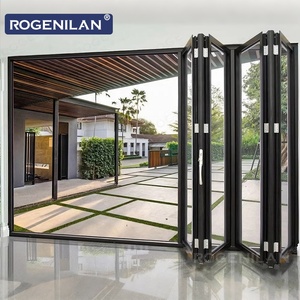
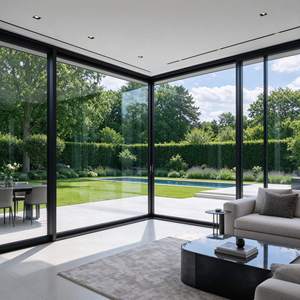
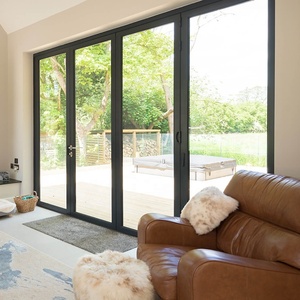
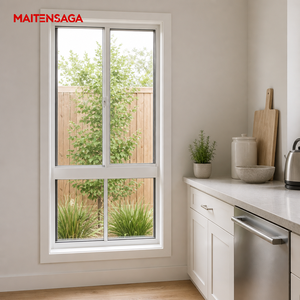
Featured Coastal & Architectural Glazing Profiles
Factory-direct impact fenestration and precision-extruded aluminum profiles designed to counter Australian coastal salt spray, seasonal Port Phillip squalls, and severe barometric turbulence.
Industry Whitepaper • Technical Specification
Structural Engineering for Extreme Meteorological Pressure in Southern Victoria
Specifying aluminum hurricane and severe-weather windows for the Greater Melbourne metropolitan area requires navigating an intricate intersection of microclimates. While the Bureau of Meteorology designates Victoria as a non-cyclonic region (Wind Region A), the coastal interface flanking Port Phillip Bay, the Mornington Peninsula, and exposed cliff-front positions across Brighton and Sorrento frequently encounter sustained gale-force winds exceeding 130 km/h with severe localized convective downbursts. In these sub-alpine and coastal micro-zones, standard residential framing deflects under rapid barometric cycling, compromising perimeter sealant envelopes and driving water penetration past sill thresholds.
As an international enterprise-grade manufacturer supplying commercial contractors and custom developers across Melbourne, our extrusion methodologies are grounded in rigorous structural engineering. The integration of high-tensile 6063-T6 architectural aluminum alloy ensures yield strengths above 214 MPa, delivering high frame moment of inertia ($I_{xx}$) without bulky sightlines. In accordance with the National Construction Code (NCC), AS 1288 (Glass in Buildings), and AS 2047 (Windows and External Glazed Doors in Buildings), our hurricane-rated systems provide verifiable safety margins that accommodate Serviceability Limit State (SLS) and Ultimate Limit State (ULS) wind loads calibrated for coastal Terrain Category 1 and 2 parameters.
Impact Glazing Dynamics: SGP Interlayers vs. Standard PVB
For buildings situated in wind-driven projectile zones, simple tempered glass proves structurally insufficient; surface fractures instantaneously release interior air pressures, creating catastrophic envelope failure. We engineer laminated impact glass sandwiches utilizing SentryGlas® (SGP) ionoplast interlayers from Kuraray. Compared to conventional polyvinyl butyral (PVB), SGP provides five times the tear strength and one hundred times the structural rigidity at ambient and elevated temperatures. Should blunt-force airborne debris shatter both outer sacrificial and load-bearing glass lites, the rigid SGP membrane maintains structural integrity inside our structural silicone rebates, resisting positive and negative pressure cycles up to ±4500 Pa.
Thermal Isolation and Condensation Countermeasures
A recurrent oversight by international fabricators serving the Victorian market is treating hurricane window assemblies strictly as wind barriers while neglecting the stringent requirements of NCC Section J (Energy Efficiency). Melbourne experiences intense diurnal temperature swings and high winter relative humidity. Cold aluminum extrusions quickly form condensing surfaces, precipitating mold growth and destroying plasterboard returns. Our impact assemblies feature precision-crimped polyamide 66 (PA66) thermal break strips reinforced with 25% structural glass fibers. This isolates the external structural extrusion from the internal perimeter, lowering total fenestration $U$-values down to 1.3 W/m²·K while keeping interior surfaces comfortably above dew points during sudden Antarctic maritime blasts.
180,000
Square Metres Facility
N6 / 4500
Pa Ultimate Design Pressure
100+
Patents & Certifications
25+
Years Manufacturing Prowess
Context-Specific Fenestration
Architectural Applications Across Greater Melbourne
Calibrated solutions delivering environmental protection, low maintenance, and design flexibility across distinct architectural settings.
Cliff-Top Coastal Residences
Engineered for high-exposure locations like Portsea, Sorrento, and St Andrews Beach. Built with 25-micron Qualicoat Class 2 marine-grade powder coatings and flush sub-sill drainage manifolds that prevent sea spray ingress and corrosive chloride degradation.
High-Rise Urban Developments
Configured for mid-to-high-rise residential towers in Southbank and Docklands. Thermal-break window wall assemblies absorb seismic and thermal building movement while resisting high vortex wind shear and buffering traffic decibels ($R_w + C_{tr} \ge 42\text{ dB}$).
Heritage Renovation Adaptations
Slimline architectural Crittall-profile replacement systems for historic properties throughout South Yarra and Toorak. Delivers traditional narrow sightline geometry combined with triple-sealed storm resistance and high-performance Low-E thermal comfort.
Design Evolution
Melbourne Building Enclosure Trends (2025–2030)
Navigating updated building codes, sustainability metrics, and spatial floor-to-ceiling design preferences.
7-Star NatHERS Mandates
Recent updates to Victoria's residential building regulations mandate whole-of-home 7-star NatHERS ratings. Standard single-chamber aluminum frames are no longer viable. Specifiers require multi-chambered thermally broken framing paired with Warm Edge spacer technology.
Oversized Flush Fenestration
High-end Victorian architectural projects increasingly favor uninterrupted spans with 3.5m+ floor-to-ceiling glass. Balancing this scale with coastal wind shear demands stiffened structural transoms, concealed heavy-duty hinges, and structural glazing gaskets.
Extreme Bushfire-Wind Zones
Outer Melbourne green wedges (Dandenong Ranges, Yarra Valley) require fenestration satisfying dual designations: high wind design pressures and AS 3959 BAL-40 to BAL-FZ bushfire exposure, calling for non-combustible frames with specialized ceramic fire glazes.
Engineering Metrics
Performance Parameters: DERCHI vs. Industry Benchmarks
Verifiable test results certified in accredited testing environments matching international and Australian requirements.
| Performance Vector | Applicable Testing Standard | Standard Market Spec | DERCHI Engineered System |
|---|---|---|---|
| Wind Pressure Resistance | AS 2047 / AS 4055 / ASTM E330 | N3 - N4 (1500 - 2000 Pa) | N6 Serviceability / 4500 Pa Ultimate Design |
| Water Penetration Resistance | AS 2047 / ASTM E331 | 150 - 300 Pa Static | 700 Pa Dynamic Wave Cyclical Chamber |
| Air Infiltration Rating | AS 2047 / ASTM E283 | ≤ 1.0 L/s·m² @ 75 Pa | ≤ 0.15 L/s·m² (Multi-Point Dual EPDM Gaskets) |
| Thermal Transmittance (U-Value) | ISO 10077-2 / NFRC 100 | Uw 3.8 - 4.5 W/m²·K | Uw 1.3 - 1.8 W/m²·K (PA66 Thermal Break) |
| Impact Debris Resilience | ASTM E1886 / E1996 / AS 1170.2 | None or Small Missile Only | Large Missile (9-lb 2x4 Timber @ 50 ft/s + SGP Core) |
| Coating Durability | AAMA 2605 / AS 3715 | Standard 60-micron Polyester | Qualicoat Class 2 Fluoropolymer / 25μm Anodized |
Enterprise Manufacturing Capabilities
Guangdong Dejiyoupin Doors and Windows Co., Ltd. (DERCHI)
With more than 25 years of manufacturing experience in Foshan, China—the global epicenter of high-end aluminum extrusion—DERCHI stands as one of China's top 10 premium window and door brands. Supplying architects, builders, and developers across the UK, Europe, Australia, and North America, our enterprise model combines high-volume fabrication with precision customization.
- 180,000 m² Advanced Production Base: 600+ skilled personnel delivering automated CNC profile machining, thermal break crimping, and automated IG units.
- Partner of Choice for European Tiers: Selected by UK Schüco installation partners for multi-villa projects requiring exact tolerances and third-party certifications.
- Engineering & BIM Precision: Complimentary parametric CAD shop drawings, wind load calculations, and door/window schedules designed directly to project documentation.
- Ocean Export Logistics Protection: Heavy-duty, fumigated crate packing with shrink wrapping and desiccants to prevent transit corrosion into the Port of Melbourne.

Procurement Clarity
Frequently Asked Questions for Melbourne Buyers
Practical guidance for Victorian developers, quantity surveyors, and project architects sourcing direct factory-grade fenestration.
Do DERCHI aluminum hurricane windows comply with Australian Standards AS 2047 and AS 1288?
Yes. Our products are engineered and tested to satisfy AS 2047 (Windows in Buildings - Design and Selection) and AS 1288 (Glass in Buildings - Selection and Installation). DERCHI windows have achieved verified AS 2047 N6 ratings—the highest structural classification for deflection, water penetration, and air infiltration. We provide project-specific structural engineering certificates, shop drawings, and compliance packs for Victorian Building Authority (VBA) certified building surveyors.
How does purchasing direct from DERCHI handle ocean transit and shipping to the Port of Melbourne?
We maintain dedicated international export lanes delivering straight to the Port of Melbourne. Windows are packed in custom, heavy-duty fumigated wooden crates with reinforced steel framing, corner edge protectors, anti-scratch surface film, and internal silica desiccants to mitigate sea-freight humidity. We offer flexible Incoterms including FOB, CIF (Port of Melbourne), and full DDP (Delivered Duty Paid) directly to your job site or staging depot in Victoria, coordinating customs clearance and import biosecurity protocols.
Can your aluminum hurricane window assemblies achieve compliance with Victoria's 7-Star NatHERS energy efficiency rules?
Yes. By utilizing our 25mm–34mm PA66 glass-reinforced polyamide thermal breaks along with argon-gas-filled insulated glass units (IGUs) incorporating soft-coat Low-E glass (such as Double Silver or Triple Silver Low-E coatings), our window assemblies achieve total system U-values ($U_w$) as low as 1.3 to 1.6 W/m²·K with Solar Heat Gain Coefficients (SHGC) tuned to your exact orientation. This allows projects to balance structural storm ratings with NCC Volume One/Two energy compliance.
What surface treatments protect aluminum frames from Mornington Peninsula and Bayside salt corrosion?
For coastal installations within 1 km of breaking surf, we apply Qualicoat Class 2 / AAMA 2605 super-durable fluoropolymer powder coatings or 25-micron architectural anodized treatments. These surface treatments resist chalking, blistering, and corrosion from prolonged salt air exposure, UV degradation, and chemical pollutants, backed by comprehensive manufacturer warranties.
What is the standard lead time for bespoke, engineered window schedules delivered to Victoria?
Following final approval of your shop drawings, production cycles typically range between 25 and 35 working days depending on finish specifications (such as custom RAL color matching or oversized triple-glazed IGUs). Ocean freight transit time from our southern Chinese port to the Port of Melbourne averages 14 to 18 days on the water. We supply transparent tracking, milestone photographic QC updates, and coordinated booking notices to keep site crane and installation crews on schedule.
Engineer Your Project with High-Performance Fenestration
Submit your window schedules, architectural elevations, or structural design targets. Our engineering division will generate a detailed project proposal, thermal modeling estimate, and competitive factory-direct supply schedule.