Precision Horizontal Sliding & Architectural Fenestration Systems
Curated architectural fenestration solutions tailored to South Korean energy codes, high-altitude structural wind pressures, and minimalist aesthetic demands.
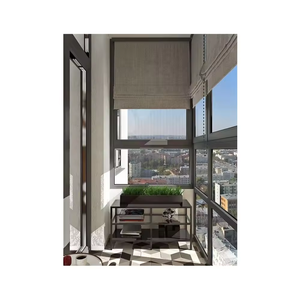
Fuson Wholesale Aluminium Sliding Windows System
- Profile: 1.4-2.0mm 6063-T5 Thermal Break
- Airtightness: KS F 2292 Grade 1 compliant
- Hardware: Concealed multi-point crescent locks
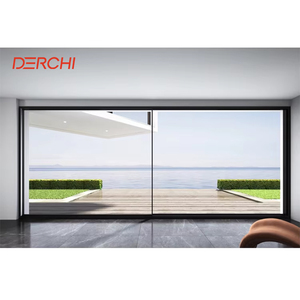
DERCHI Q9 Ultra-Narrow Architectural Sliding System
- Sightline: 16mm ultra-slim interlock stile
- Track: Embedded flush drainage track
- Glazing: 6mm+12Ar+6mm Low-E Tempered
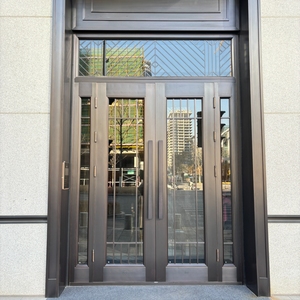
Commercial Heavy-Duty Aluminum Storefront Entrance
- Duty: High-traffic commercial pivot & slide
- Reinforcement: Internal corner steel cleats
- Finish: AkzoNobel fluorocarbon powder coat
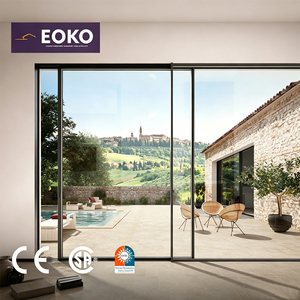
EOKO Thermal Break 38dB Acoustic Sliding System
- Sound Isolation: STC 38dB urban noise filter
- Thermal Break: 24mm Technoform PA66 GF25
- Compliance: CE / CSA / KS F 3117 Verified
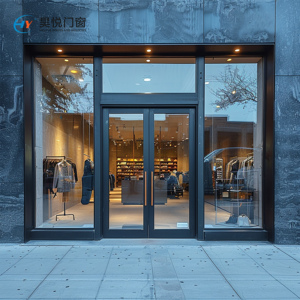
Architectural Double Storefront Glass Portal
- Application: Korean Retail, Malls & Clinics
- Safety: 10mm/12mm SGCC tempered glass
- Cycles: Tested to 500,000 smooth cycles
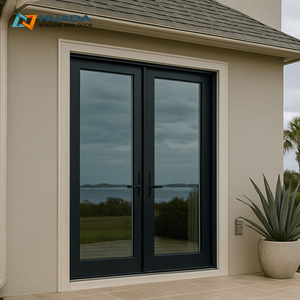
Hurricane Impact Coastal Casement / French Unit
- Wind Load: 5000Pa structural resistance
- Target Zone: Busan, Yeosu & Jeju coastlines
- Glazing: SentryGlas laminated IGU
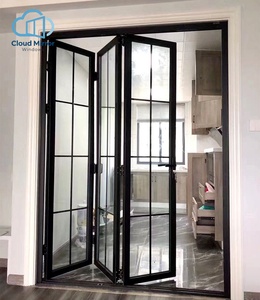
Architectural Grid Bi-Fold Apartment Balcony Portal
- Structure: Top-hung heavy stainless rollers
- Aesthetics: Modern slim French colonial grid
- Weathering: Dual continuous EPDM compression
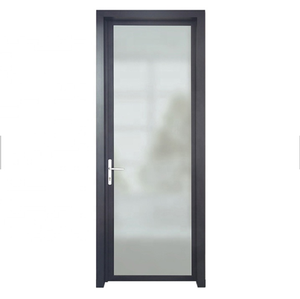
High-Insulation Double Glazed Casement System
- U-Factor: Up to 0.98 W/(m²·K) achieved
- Airtightness: Pressure equalized rebate design
- Integration: German multi-point gear lock
Engineering Compliance for South Korea's Building Codes & Climatic Extremes
A technical evaluation of why standard international fenestration fails in Korean building typologies, and how our Foshan manufacturing hub bridges the gap with engineered precision.
Korea Zero Energy Building (ZEB) Mandate
Under the revised Green Building Creation Support Act, all private residential buildings exceeding 30 households and public structures must comply with strict Zero Energy Building standards. Horizontal sliding windows, historically criticized for air leakage at interlocking stiles, must now demonstrate thermal transmittance values (U-factor) below 1.0 W/(m²·K) in Central 1 and Central 2 regional zones.
Micro-Dust & Siberian Infiltration Defense
Korean winter monsoons bring sustained sub-zero Siberian winds (-15°C to -20°C), while spring brings fine yellow particulate dust (PM2.5 / Hwangsa). Our systems utilize KS F 2292 Grade 1 airtightness multi-fin continuous Santoprene and EPDM weather-stripping with dual vulcanized perimeter corners, eliminating drafts and micro-contaminant infiltration entirely.
Typhoon Pressure Load on High-Rise Facades
Coastal metropolises such as Busan Marine City and Jeju Island encounter super-typhoon wind loads exceeding 4,500 Pa to 5,500 Pa. Our heavy-duty aluminum extrusions (6063-T6 / 6005-T5 alloys) feature internal steel-reinforced interlocks and engineered drainage chambers preventing reverse water pressure surges under KS F 2295 test regimens.
| Performance Dimension | Korean Regulatory Standard (KS) | Generic Chinese Exporter | Our Precision-Engineered Spec | Korean Project Relevance |
|---|---|---|---|---|
| Air Permeability | KS F 2292 (Grade 1 ≤ 1.0 m³/h·㎡) | Grade 3-4 (3.0~5.0 m³/h·㎡) | KS Grade 1 (≤ 0.68 m³/h·㎡) | Crucial for high-rise apartment energy certifications & dust exclusion. |
| Thermal Transmittance | KS F 2278 (Window U-factor ≤ 1.2 W/㎡·K) | Non-thermal break or 14.8mm strip (U > 2.4) | 24mm-34mm Technoform PA66 GF25 (U ≤ 0.95 W/㎡·K) | Mandatory for Seoul Metropolitan Zero-Energy 2025/2030 building targets. |
| Water Tightness | KS F 2295 (Grade 35~50, up to 500Pa) | Standard weep holes (250Pa threshold) | Pressure-Equalized Multi-Chamber (Grade 50+, 600Pa+) | Guarantees zero leakage during coastal monsoons in Busan and Gangwon-do. |
| Wind Load Resistance | KS F 2296 (Grade 360 ~ Grade 500) | Unreinforced slender mullions (≤ 2400Pa) | Internal Steel I-Beam Stiffeners (Up to 5500Pa / Grade 500) | Engineered for 40+ story high-density residential towers and sea-facing hotels. |
| Acoustic Performance | KS F 2808 / KOLAS Acoustic Standard | Single/Dual generic float glass (24-28 dB) | Asymmetric Acoustic Laminate + Argon (STC 38dB - 42dB) | Soundproofing against downtown highway noise in Seoul, Bundang, and Songdo. |
Localized Application Scenarios Across South Korea
From prime residential redevelopments to boutique coastal hospitality, see how our horizontal sliding profiles are specified across the Korean peninsula.
High-Rise Apartments (아파트)
Location Context: Seoul Metropolitan, Pangyo, Songdo International City.
Large multi-panel horizontal sliders replace bulky traditional double-PVC windows. Delivers expansive unobstructed urban views while matching the strict condensation prevention criteria (공동주택 결로방지 설계기준).
Urban Officetels & Studios
Location Context: Gangnam-gu, Mapo-gu, Yeouido Business Districts.
High-performance acoustic sliding units dampening 38dB+ of heavy urban traffic decibels. Ultra-narrow frames maximize natural day-lighting in compact floorplans without compromising thermal insulation.
Luxury Suburban Villas (단독주택)
Location Context: Yangpyeong, Gapyeong, Jeju Island retreats.
Oversized, motorized horizontal sliding portals blending indoor living rooms with outdoor decks. Equipped with hidden zero-step threshold tracks ensuring smooth, barrier-free transitions for premium residential clients.
Commercial Retail & Cafes
Location Context: Seongsu-dong, Hongdae, Haeundae Coastal Cafes.
Architectural storefront horizontal slide and multi-fold portal systems that open whole frontages during mild seasons, paired with high-spec fluorocarbon anodized coatings defying salt-spray corrosion.
South Korea Fenestration Trends: The Transition to Architectural Aluminum
Discover why Korean architects, tier-1 general contractors (건설사), and developers are migrating away from thick PVC uPVC frames toward slimline thermal-break aluminum systems.
The "Glass Curtain" Aesthetic Demand
Modern Korean residential buyers view window sightlines as a primary determinant of luxury. Traditional uPVC sliding windows feature bulky sash profiles exceeding 120mm-150mm. Our ultra-narrow aluminum horizontal systems reduce visible interlocking rails to just 16mm-25mm, maximizing the panoramic window-to-wall ratio by over 18%.
Structural Rigidity for Oversized Panes
South Korean architecture embraces floor-to-ceiling glass sashes up to 3.2 meters tall. At these dimensions, PVC warps, sags, and leaks air under cyclonic wind forces. Extruded primary 6063-T5/T6 aluminum alloys provide a modulus of elasticity roughly 25 times greater than PVC, ensuring lifetime dimensional stability without sash droop.
RCEP & Korea-China FTA Tariff Efficiencies
Under the Regional Comprehensive Economic Partnership (RCEP) and the China-Korea Free Trade Agreement, import duties on aluminum profiles and fenestration components are systematically reduced or zero-rated. Sourcing direct from our Foshan production facility lowers procurement costs by 30-45% compared to domestic Korean brand fabricators.
Why South Korean EPCs and Importers Partner with Our Foshan Plant
Combining 25+ years of architectural fenestration mastery with direct industrial supply chain integration in China's aluminum capital.
180,000㎡ Smart Production Base with 600+ Skilled Specialists
Headquartered in Foshan, Guangdong—the epicenter of global aluminum extrusion—our facility operates high-precision German 5-axis CNC machining centers, automated cutting saws, and automated thermal-break crimping assembly lines. We engineer profiles to fractional tolerances under ±0.2mm, eliminating on-site installation mismatches.
From supplying UK Schüco partners for multi-villa developments to delivering landmark towers across North America and Australia (AS 2047 N6 certified), our factory holds over 100 certifications and 30+ proprietary engineering patents.

BIM & Korean CAD Detailing
Our bilingual design engineering desk translates Korean structural drawings, supplying full shop drawings, wind-pressure calculations, and glass thermal simulations at zero cost prior to manufacturing.
In-House Testing Laboratory
Every window series undergoes cyclical laboratory testing for air permeability (KS F 2292), dynamic water tightness (KS F 2295), and structural deflection under four-corner load simulators before dispatch.
High-Speed Logistics to Incheon & Busan
Strategically situated near Nansha and Shenzhen ports. Direct shipping line sailings reach Busan Port in 3 days and Incheon Port in 4-5 days, drastically cutting project lead times versus European or US imports.
Full Export Protective Packaging
Multi-layer preservation utilizing protective peel-coatings, thick pearl-cotton corner bumpers, and fumigated steel-strapped solid plywood crates ensuring zero transit abrasion or glass micro-fractures.
Frequently Asked Questions by Korean Developers & General Contractors
Clear, direct answers regarding customs compliance, KC/KS validation, logistics routes, and technical customization parameters.
1. Do your aluminum horizontal sliding windows meet South Korea's Window Energy Efficiency Rating System (창호 에너지소비효율 등급제)? +
Yes. By integrating our multi-chamber thermal break profiles (featuring 24mm to 34mm German Technoform PA66 GF25 insulation bars) with triple-glazed Low-E insulated glass units (e.g., 5mm Low-E + 12Ar + 5mm Clear + 12Ar + 5mm Low-E with warm-edge Swiss-spacers), our systems comfortably achieve U-factors below 0.95 - 1.2 W/(m²·K) and air permeability under 1.0 m³/(h·m²). This performance satisfies Korean Grade 1 and Grade 2 energy efficiency certifications, fully qualifying your project under Korea's Zero Energy Building (ZEB) mandate.
2. What certification and laboratory test reports can you provide for Korean local building inspections (감리 / 사용승인)? +
We supply full third-party test reports conducted in accordance with KS F 3117 (Windows), KS F 2292 (Airtightness), KS F 2295 (Watertightness), and KS F 2296 (Wind Pressure Resistance) standards. Furthermore, we maintain CE (EN 14351-1), ISO 9001, and North American NFRC/AAMA credentials. If your project mandates testing by a domestic Korean testing agency (such as KCL - Korea Conformity Laboratories or KTR - Korea Testing & Research Institute), we can dispatch customized factory sample mockups for pre-submission testing before mass fabrication commences.
3. How does the China-Korea FTA or RCEP impact customs duties when importing to Incheon or Busan? +
With an official Certificate of Origin (Form E or RCEP Certificate) issued by Chinese authorities upon container loading, qualifying finished aluminum windows and architectural profiles benefit from preferential tariff rates (often reduced from the generic 8% MFN duty down to 0% - 3.2% depending on the specific HS Code classification, such as HS 7610.10). Our dedicated documentation team provides all necessary paperwork—including commercial invoices, packing lists, and origin certifications—ensuring smooth customs clearance through Korean Customs Service (관세청) without delayed terminal dwell times.
4. What hardware systems, locks, and handles are compatible with your horizontal sliding frames? +
We offer extensive hardware modularity. Our standard setups incorporate world-renowned European hardware (Siegenia, Roto, Hoppe, or G-U). However, for the Korean market, we frequently integrate Korean-standard automatic crescent latches, secondary child-safety travel limiters, and specialized Korean digital sliding smart locks. All stainless-steel rollers (SUS304/SUS316) feature precision carbon-sealed bearings rated for 200,000 continuous opening cycles, effortlessly gliding heavy sash loads up to 400 kg.
5. What is the typical lead time from CAD shop drawing sign-off to delivery at Busan / Incheon Port? +
Following final sign-off on your shop drawings and glazing schedules, our standard production timeline spans 25 to 35 calendar days depending on customization requirements (such as bespoke RAL powder coats or structural mullion reinforcements). Sea freight from Nansha or Shenzhen to Busan Port requires just 3 days, and to Incheon Port 4-5 days. Total turnaround frequently ranges between 35 and 45 days, vastly outperforming European competitors who require 4 to 6 months.
6. What is your Minimum Order Quantity (MOQ) and how do you support multi-family vs. bespoke luxury villas? +
For custom residential private villas (단독주택), our MOQ begins at 50 square meters or one combined project order. For commercial developments and multi-unit residential apartment towers, our 180,000㎡ manufacturing base possesses an annual processing capacity exceeding 300,000 square meters. We assign a dedicated bilingual technical project manager to coordinate batch deliveries aligned precisely with your site installation sequence (층별 공정 납품).